Grease Trap Cleaning For Cape Coral Restaurants Cost And Schedule

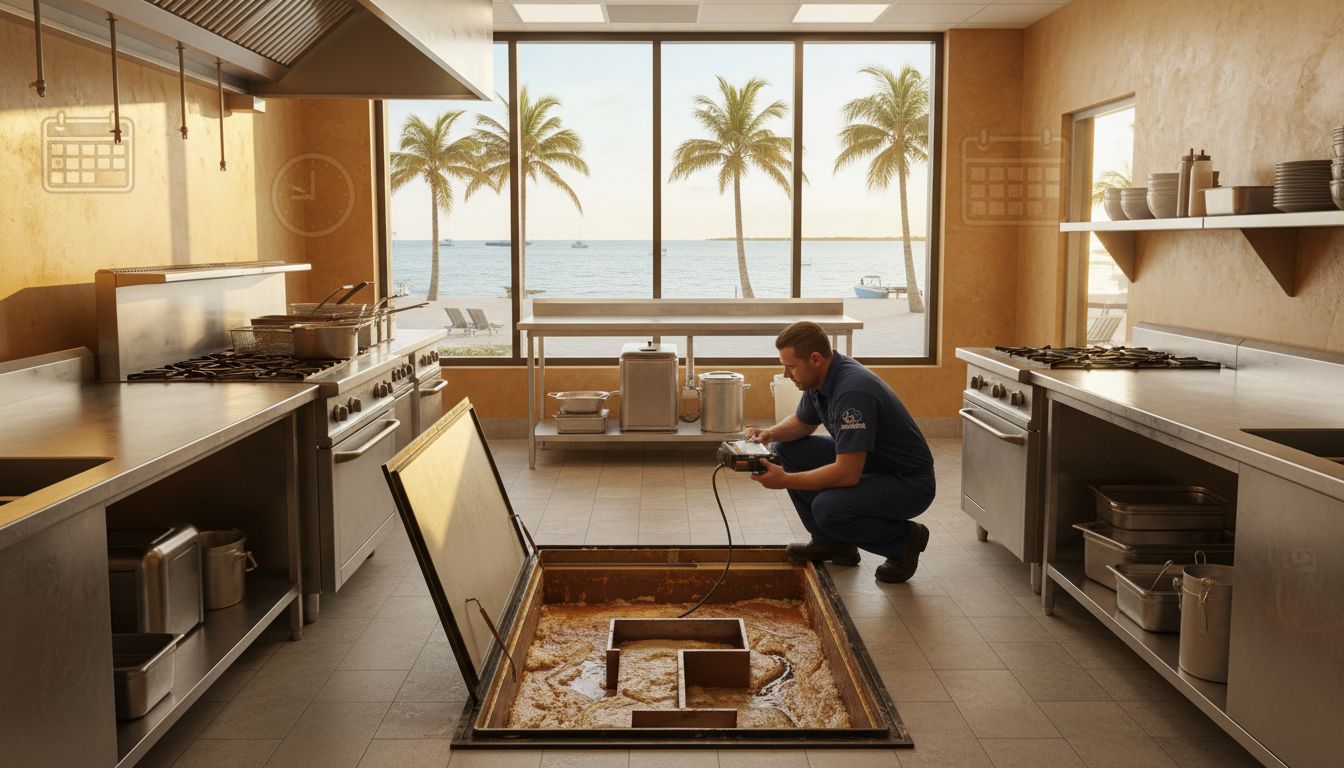
If you run a restaurant in Cape Coral, your grease trap is like a bouncer at the door. It keeps fats, oils, and grease (FOG) from getting into the sewer, where they can cause backups, odors, and expensive downtime.
The bottom line: grease trap cleaning Cape Coral costs depend on trap size, access, and how often you service it. Most restaurants do best with a set schedule (not "when it smells bad"). In this guide, you'll get 2026 cost estimates, a simple frequency decision guide, and a sample 12-month schedule you can copy into your calendar.
What Cape Coral and Lee County expect from grease trap maintenance
Cape Coral restaurant grease systems fall under local FOG controls that protect the public sewer. In practice, inspections and expectations align with Lee County's grease management approach, and state rules still apply to how grease waste gets handled and disposed.
Here are the operational rules that matter most day to day:
- Don't wait for a clog. A common industry standard used by local programs is the "25% rule," meaning you clean the trap before the grease layer plus settled solids take up about 25% of the trap's liquid depth.
- 90 days is often the outer limit for interceptors. Many outdoor grease interceptors are expected to be pumped at least every 90 days, and sooner if buildup is heavy.
- Small indoor traps can need weekly service. Under-sink style traps fill quickly in busy kitchens. Some programs treat weekly cleaning as the maximum interval for small units, especially when grease and solids build fast.
- Keep records. Expect to maintain pump-out logs and receipts so you can prove service history during an inspection.
- Dispose of waste properly. Florida rules address proper handling of grease waste, and they're aimed at preventing illegal dumping back into drains or onto the ground.
A good rule for managers: if you can't prove it was cleaned, it will be treated like it wasn't.
Also, remember the grease trap is only one part of your kitchen plumbing risk. Floor drains, main lines, and lift stations (if you have one) can still clog from food solids and soap scum. Pairing grease service with a broader preventive plan helps avoid surprise shutdowns. A solid starting point is this SWFL business plumbing maintenance checklist.
2026 grease trap cleaning costs in Cape Coral (estimates that vary by site)
Grease trap cleaning is usually priced by trap size, how full it is, and how hard it is to access. In 2026, many Cape Coral restaurants see routine pump-outs land in a predictable range, as long as they don't fall behind.
Here are 2026 estimates for planning (your pricing will vary by provider and site conditions):
| System type (typical) | Common size range | Typical service interval | 2026 estimated price per visit |
|---|---|---|---|
| Small indoor grease trap (under-sink) | 20 to 50 gallons | Weekly to monthly | $125 to $225 |
| Medium indoor trap (in-floor or nearby) | 50 to 200 gallons | Monthly to every 2 months | $175 to $350 |
| Outdoor grease interceptor | 750 to 1,500 gallons | Every 1 to 3 months | $225 to $450 |
| Large interceptor (high volume sites) | 2,000 gallons and up | Monthly to quarterly | $400 to $1,100+ |
Most restaurants save money by staying on a set route. On-call visits tend to cost more because the vendor has to reshuffle trucks and disposal.
A few cost drivers to budget for:
- "First visit" or catch-up cleaning : If the trap hasn't been serviced on schedule, expect extra labor and heavier disposal.
- Access issues : Locked enclosures, blocked lids, or tight indoor installs can add time.
- After-hours calls : Nights, weekends, and emergency response cost more.
- Related drain work : If grease has already moved past the trap, you might also need drain cleaning or jetting.
The cheapest pump-out is the one you do on time, because it stays simple.
If you're comparing quotes, ask one direct question: "Is this price for pumping only, or pumping plus scraping, line check, and manifest paperwork?" The details change the real cost.
Picking the right cleaning frequency and building a 12-month schedule
Frequency isn't guesswork. It's a mix of trap size, menu style, and how hard your kitchen runs. The goal is simple: clean before the trap passes the 25% buildup point, and keep paperwork ready.
A simple decision guide for grease trap cleaning frequency
Start with your concept and volume, then adjust after two or three service cycles.
| Restaurant situation | What usually happens | Starting frequency (adjust as needed) |
|---|---|---|
| Fried food heavy menu, high ticket volume | Grease builds fast, traps "turn" quickly | Every 2 to 4 weeks |
| Full-service kitchen, moderate frying | Steady grease load | Every 4 to 8 weeks |
| Low grease menu (limited cooking), low volume | Slow buildup, but still needs checks | Every 8 to 12 weeks |
| Small under-sink trap with steady use | Limited capacity, easy to overwhelm | Weekly to every 4 weeks |
Even with a schedule, do quick checks so you don't get surprised. Have a manager look for:
- Slow sinks or floor drains, even if only at peak hours
- Persistent sour or rancid odors near the trap
- Gurgling drains, backups, or "burping" at floor sinks
- More fruit flies around drains (often linked to buildup)
If any of those show up, shorten the interval right away.
Sample 12-month grease trap cleaning schedule (Cape Coral)
This sample assumes a typical mid-volume restaurant with an outdoor interceptor, and a monthly service plan. If you choose quarterly pumping, keep the same monthly checks, and swap pump-outs to March, June, September, and December.
| Month | Manager task (10 minutes) | Vendor service |
|---|---|---|
| January | Quick level and odor check, confirm log binder | Pump-out and scrape |
| February | Check drains at peak, note any slow fixtures | Pump-out and scrape |
| March | Inspect lid access, confirm disposal paperwork filed | Pump-out and scrape |
| April | Spot check for buildup signs, review staff FOG habits | Pump-out and scrape |
| May | Pre-summer volume planning, confirm next appointments | Pump-out and scrape |
| June | Mid-year review, adjust frequency if needed | Pump-out and scrape |
| July | Watch for peak season strain, note any drain changes | Pump-out and scrape |
| August | Check access after storms, keep lids clear | Pump-out and scrape |
| September | Review logs, verify dates and vendor receipts | Pump-out and scrape |
| October | Kitchen refresher on "no grease down drains" | Pump-out and scrape |
| November | Pre-holiday volume check, tighten schedule if needed | Pump-out and scrape |
| December | Year-end file cleanup, plan next year's route | Pump-out and scrape |
To make service day easier, keep the trap accessible, clear the area, and confirm someone can sign paperwork. Also, keep a simple folder with invoices, dates, and any inspector notes.
Conclusion
Grease service isn't glamorous, but it protects your restaurant's cash flow. With clear 2026 cost expectations, a frequency rule that matches your menu, and a written 12-month plan, grease trap cleaning becomes routine instead of a crisis. If you want fewer backups and fewer emergency calls, keep grease out of the sewer by staying consistent, documenting everything, and adjusting the schedule when your volume changes.


Get a Free Estimate
Got a plumbing issue? We’re here to help! Whether you need emergency repairs, routine maintenance, or have a question about our services, our team is ready to assist you.