
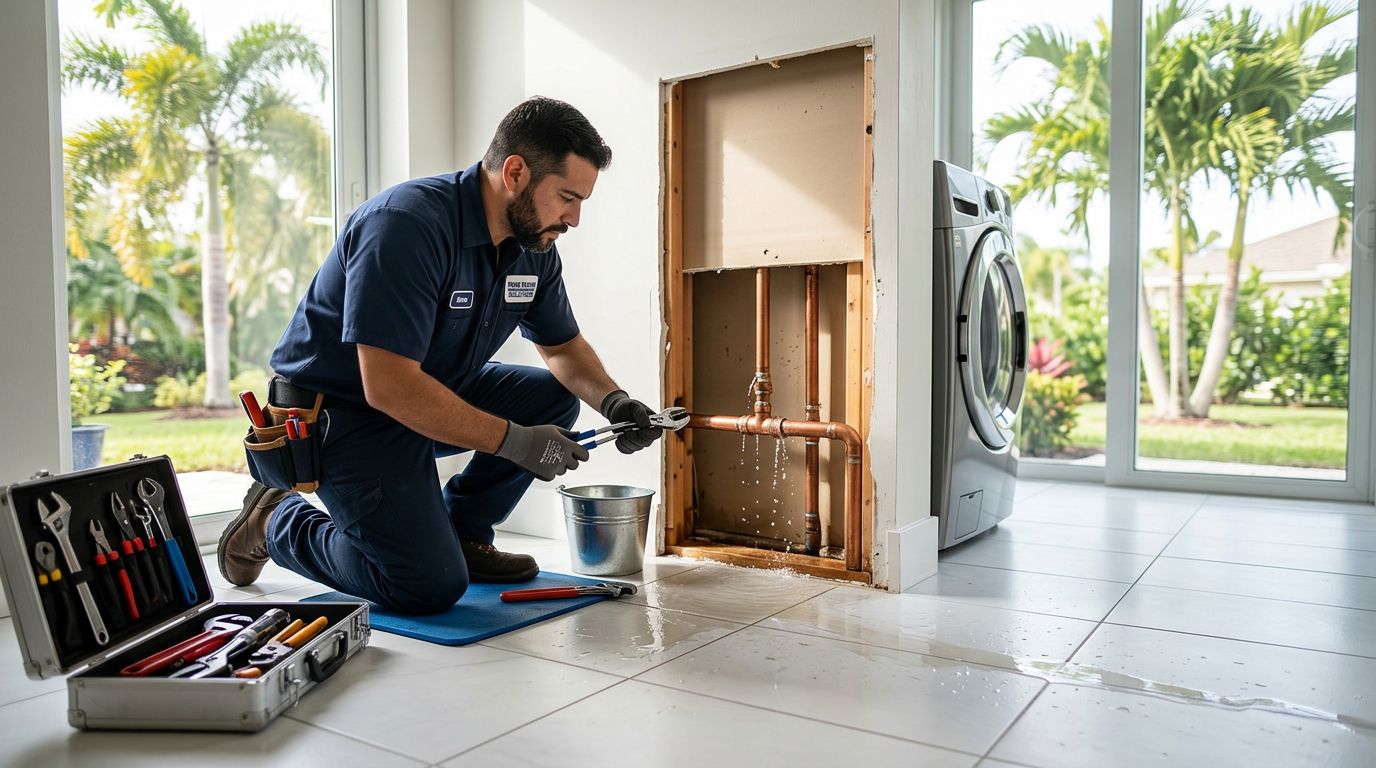
Cape Coral High Water Bill Checklist For Hidden Plumbing Leaks

A surprise Cape Coral water bill can feel like a smoke alarm with no smoke. Your habits didn't change, yet the total jumps. Most of the time, that extra water went somewhere, either through a leak or through a device that never really "turns off."
This checklist walks you through fast, practical tests with clear pass or fail outcomes. You'll also know what to document, what to avoid, and when it's time to call a leak detection pro.
Start with two quick sanity checks (so you don't chase the wrong problem)
Before you start shutting valves and opening tanks, rule out the simple stuff. This takes five minutes and can save an hour.
1) Compare the dates and days on the bill
Pass: Billing period matches your normal cycle, no extra days.
Fail: More days than usual can explain higher usage even with normal routines.
2) Think back to "one-time" water events
Pass: No guests, no pressure washing, no new plants, no pool top-offs, no recent plumbing work.
Fail: Any of those can spike usage. Write it down anyway because it helps narrow the search.
3) Check for obvious running water sounds
Pass: Quiet house, no hiss at toilets, no water heater refill sound, no outdoor running water.
Fail: If you hear steady flow with everything "off," treat it like a real lead and move to the meter test.
A good rule: if you can't explain the usage in plain words, test the meter. The meter doesn't guess.
The water meter test (fastest pass/fail for a hidden leak)
This is the most useful DIY step for a high bill. It tells you whether water is moving when it shouldn't.
4) Prep the house for a clean test
Pass: All faucets off, no ice maker draw, no laundry, no dishwasher, no irrigation running.
Fail: If anything cycles, your meter may move for a normal reason. Pause those items first.
5) Photograph the meter reading and leak indicator
Pass: Clear photo showing the numbers and the small leak indicator (often a triangle or small dial).
Fail: If the photo is blurry, retake it. Documentation matters later with a utility and a plumber.
6) Watch the leak indicator for 2 to 5 minutes
Pass: Indicator stays still the entire time.
Fail: If the indicator moves with all fixtures off, a leak is likely
on your side of the system.
7) Do the "time gap" confirmation
Pass: Meter reading stays the same after 30 to 60 minutes with all water off.
Fail: If the numbers increase, water is leaving somewhere, even if you can't see it.
Here's a quick way to interpret what you see:
| Meter result with all fixtures off | Pass/Fail | What it usually means | Next step |
|---|---|---|---|
| No movement at all | Pass | Leak is less likely, usage may be behavior-based or intermittent | Re-check during a quiet time, then spot-check toilets |
| Slow, steady movement | Fail | Small continuous leak (often toilet, softener, faucet, pinhole) | Isolate toilets and appliances next |
| Faster movement | Fail | Larger leak (could be underground, slab, or exterior line) | Shut off at the house valve, then isolate indoor vs outdoor |
Caution: If you shut off the main, turn fixtures on gently afterward. Quick valve moves can cause water hammer. If a valve feels stuck, don't force it. A broken shutoff creates a bigger emergency.
Indoor hidden leak checks (where "silent" leaks love to hide)
Once the meter shows a fail, isolate the most common indoor culprits. These leaks often waste water without leaving a puddle.
8) Toilet dye test (best return on effort)
Pass: After 10 to 15 minutes, the bowl water stays clear (no dye seeping in).
Fail: If colored water shows in the bowl without flushing, the flapper or valve leaks. A running toilet can quietly drain a lot of water over days. For common toilet issues that drive bills up, see toilet problems that waste water.
9) Check the water heater area and the relief line
Pass: Pan is dry, fittings are dry, no drip from the temperature and pressure relief discharge pipe.
Fail: Any steady dripping needs attention. Also, listen for frequent refills when nobody used hot water.
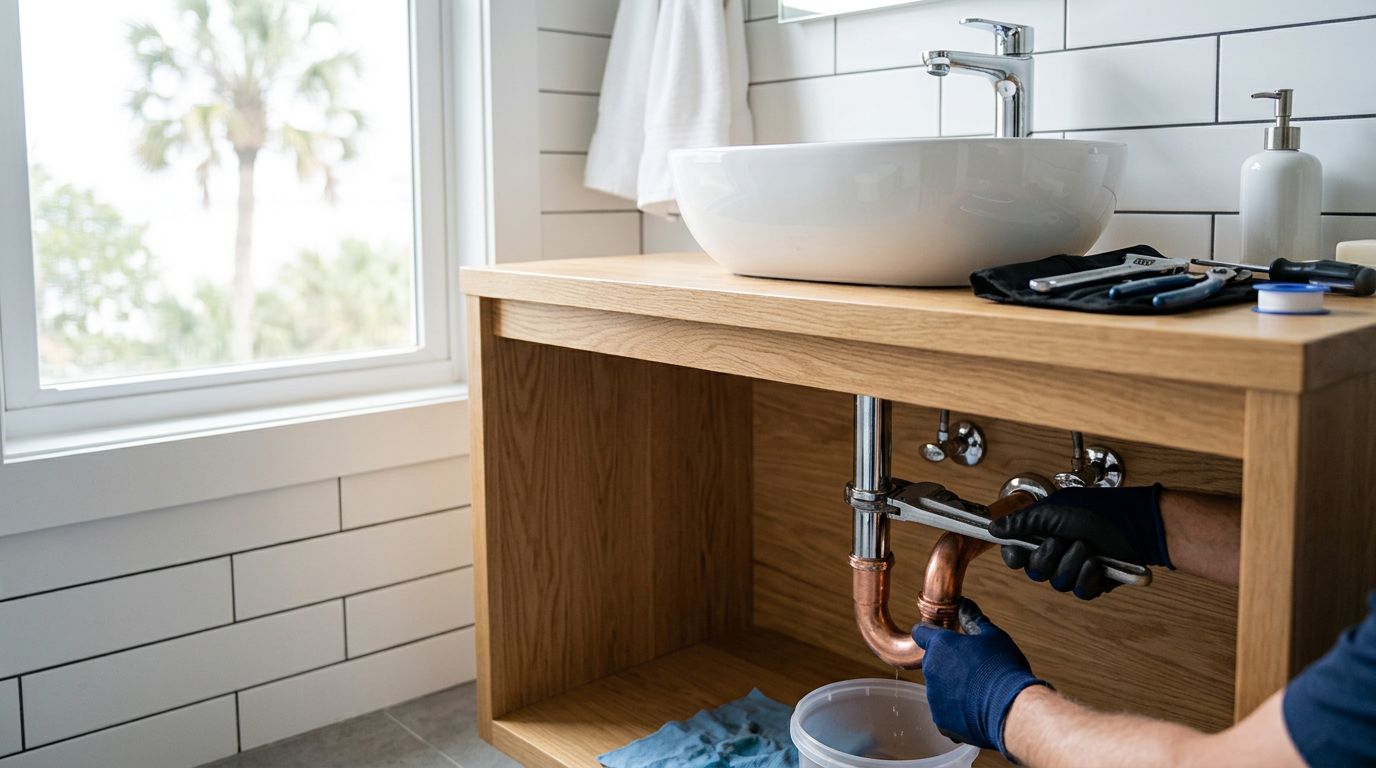
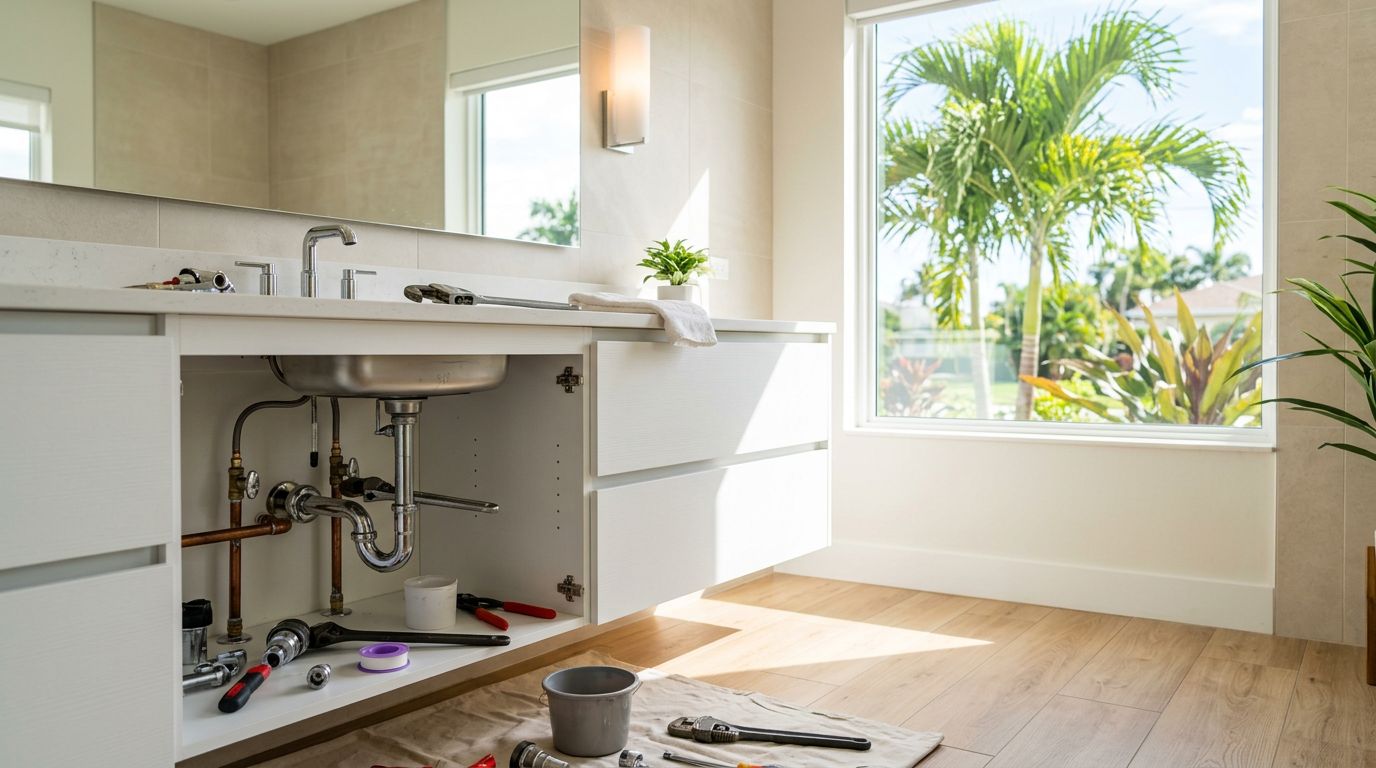
10) Look under sinks and behind vanities (use a dry paper towel)
Pass: Shutoffs, traps, and supply lines stay dry when wiped.
Fail: Moisture on valves or braided hoses suggests a slow leak. Even a small seep can add up.
11) Water softener, filtration, or reverse osmosis system
Pass: No constant drain flow, no stuck regeneration cycle, no wet brine area.
Fail: If you hear constant trickling to a drain, the unit may be running nonstop.
12) "Hot-only" clue test
Pass: Meter stays still when the water heater is off and all hot fixtures are closed.
Fail: If the meter still moves, the leak likely isn't limited to the hot side. If movement stops only when the heater is isolated, a hot line leak becomes more likely.
If the meter fails and none of these indoor checks hit, don't assume you're safe. That's when leaks hide under slabs, in walls, or outside.
Outdoor, irrigation, and under-slab suspects (plus the safest next steps)
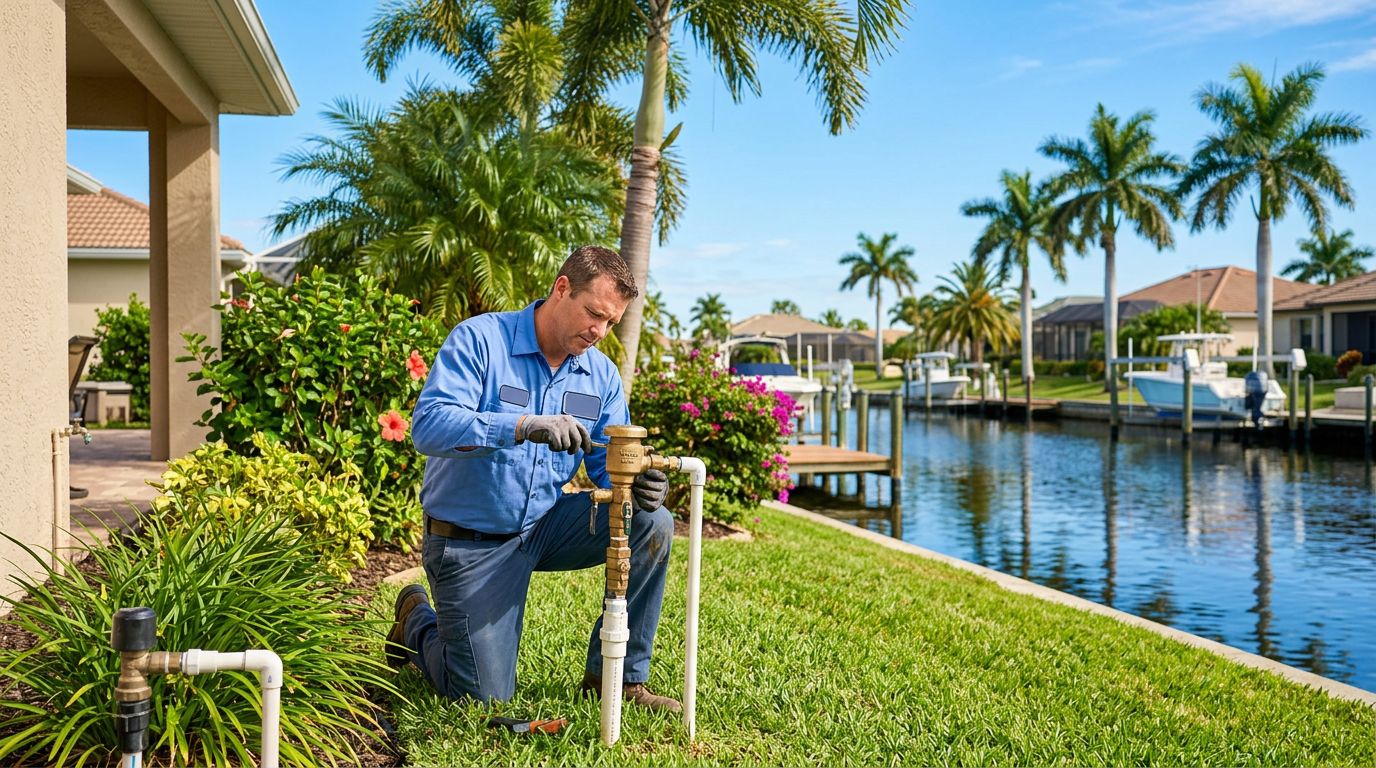
Cape Coral homes often have water use outside the house that doesn't show up as a "drip." Think of it like a straw in sand. Water disappears and the ground may look normal at first.
13) Isolate irrigation (if you have a separate shutoff)
Pass: After shutting irrigation off, the meter stops moving.
Fail: If the meter still moves, irrigation isn't the only problem (or you shut off the wrong valve). If the meter stops, the leak is likely in a zone valve, a broken line, or a backflow area.
14) Walk the yard for soft spots and "too-green" strips
Pass: No soggy areas, no sinking soil, no sudden plant growth line.
Fail: Wet ground in dry weather points to an underground leak. Flag the spot and take photos.
15) Watch for slab leak warning signs inside
Pass: No warm tile spots, no musty smell at baseboards, no unexplained damp flooring.
Fail: Warm areas, damp edges, or a constant faint water sound can point to an under-slab leak. For more specifics, review slab leak signs in Cape Coral homes.
At this stage, it helps to bring in a licensed plumber with proper tools. Non-invasive testing can pinpoint the leak without random cutouts or digging. Start here if you need help fast: Cape Coral leak detection and repair. If you're budgeting and want to know what typically affects pricing, see Cape Coral leak detection service costs.
Don't open walls or jackhammer a slab based on a guess. First confirm the leak's path, then pick the least-destructive repair.
Conclusion
A high Cape Coral water bill doesn't always mean heavy usage. Often, it means hidden flow that never stops. Start with the meter test, isolate indoor fixtures, then rule out irrigation and yard lines. Take clear photos of readings, write down dates and times, and avoid forcing stuck shutoffs. Once the meter says "fail" and the source stays unclear, professional leak detection is the fastest way to stop the waste and limit damage.


Get a Free Estimate
Got a plumbing issue? We’re here to help! Whether you need emergency repairs, routine maintenance, or have a question about our services, our team is ready to assist you.