Sump Pump Failure Signs In Cape Coral Garages And Low Areas

Sump Pump Failure Signs In Cape Coral Garages And Low Areas

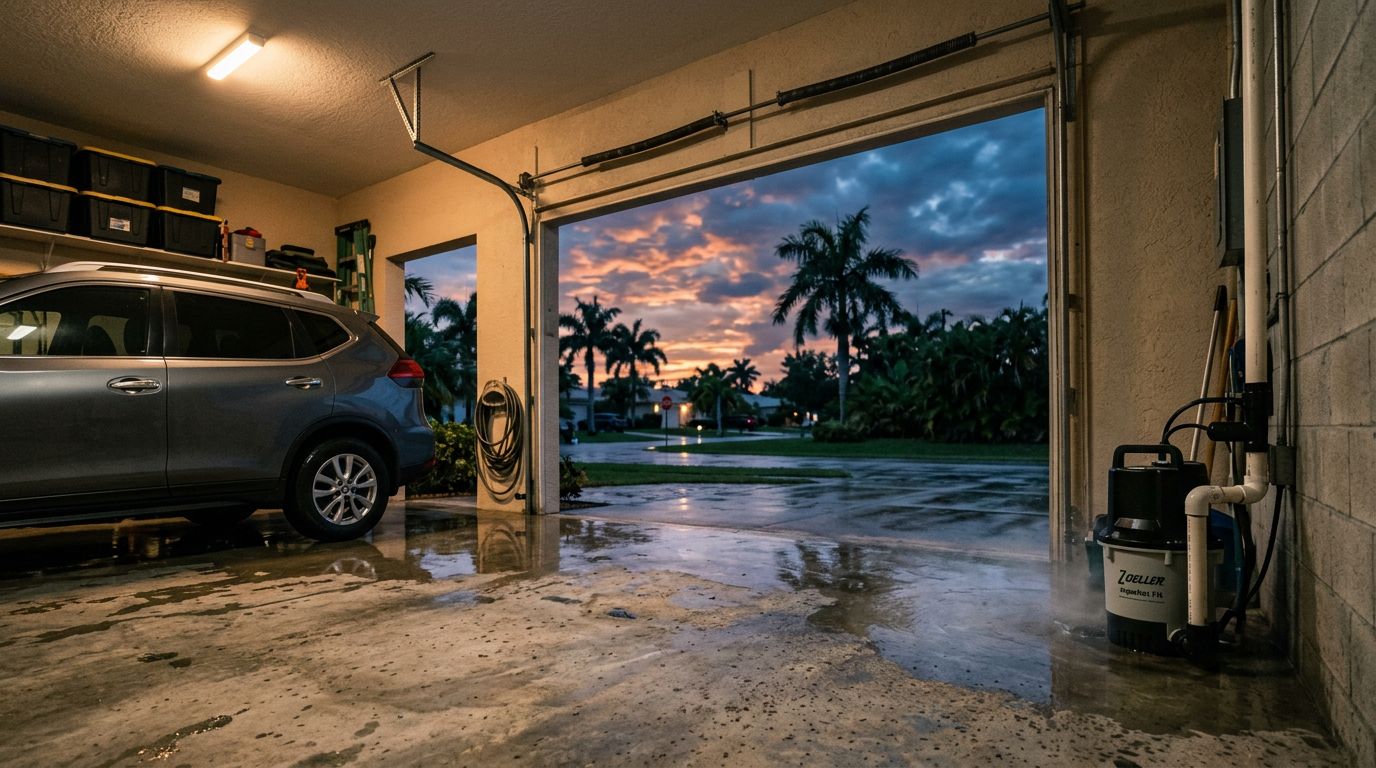
A sump pump is like a bouncer for groundwater, it keeps water from hanging around where it doesn't belong. In Cape Coral, that matters a lot in garages and low areas , where water finds the easiest path downhill.

The hard part is this: sump pumps often fail quietly at first. By the time you see puddles, you're already behind. The good news is most sump pump failure signs show up days or weeks before a full breakdown, if you know what to watch for.

Below are the warning signs that matter most in Cape Coral homes, what they usually mean, and what you can safely do next.

Why garages and low spots in Cape Coral stress sump pumps

Garages sit lower than living spaces in many homes. They also collect runoff from driveways and side yards. If your property has a low corner, a swale, or a spot where gutters dump water, that area can feed groundwater toward the slab.

Then storm season rolls in. Heavy rain can push water levels up fast, so the pump runs longer and cycles more often. On top of that, sandy soil can carry fine grit. Over time, that grit wears on the impeller and clogs intake screens.

Power issues add another local wrinkle. Short outages or flickers during storms can stop a pump mid-cycle. If the pit refills quickly, water rises before you notice.

Finally, discharge routing matters more than most people think. If the discharge line dumps too close to the house, the pump may send water out, only for it to soak back in and return to the pit. That "yo-yo" effect can wear out a pump early.

If your sump pump seems to run more during light rain than it used to, treat that as a warning. It often means water is returning to the pit.

The sump pump failure signs you can spot early

Some signs are obvious, like standing water. Others are subtle, like a pump that sounds different than last month. Watch for these common sump pump failure signs in Cape Coral garages and low areas:

  • Water in the pit, but the pump stays off : Often a stuck float switch, failed motor, or no power to the outlet.
  • Runs nonstop or runs for a long time : Can point to a failing pump, a clogged discharge, or water recirculating back toward the foundation.
  • Short-cycling (rapid on and off) : Common with a misadjusted float, a jammed float, or an undersized pump.
  • Grinding, rattling, or humming : Grinding can mean worn parts or debris in the impeller. A hum with no pumping can mean a jam or motor trouble.
  • Vibration or "walking" : A pump that shifts can stress the discharge connection and loosen fittings.
  • Musty odor or dampness nearby : Even without standing water, moisture can build mold fast in a garage.
  • Rust, corrosion, or oily sheen in the pit : Rust can signal age or moisture damage. An oily sheen can hint at mechanical breakdown.
  • Visible discharge outside stops during rain : If you normally see water flowing outside and it suddenly doesn't, something's wrong.
  • Tripped GFCI or breaker : It may be a simple nuisance trip, or it may signal a failing motor drawing too much power.

A quick reality check helps: if you only notice the problem when the forecast gets ugly, your system isn't giving you much margin.

Symptom-to-cause table: what the sign usually means

Use this table as a quick "most likely" guide. One symptom can have more than one cause, but this narrows the search.

What you notice What it often means Why it matters in a garage/low area
Pump won't turn on, pit is full No power, bad float switch, failed motor Flooding can start fast on a low slab
Pump runs, but water level barely drops Clogged intake, jammed impeller, weak motor You get the sound without the protection
Pump turns on and off every few seconds Float problem, check valve issue, recirculation Short-cycling burns motors and trips breakers
Loud grinding or rattling Debris in pump, worn bearings Sand and grit are common after heavy rain
Water returns to pit right after pumping Failed check valve, discharge slope problem Leads to constant cycling and early failure
Discharge line freezes up (rare here) or clogs Blockage, crushed line, stuck flapper/check A blocked line can cause overflow at the pit

Takeaway: cycling problems and weak pumping are just as risky as a pump that's totally dead, because they fail at the worst time.

What to do next: safe troubleshooting, storm readiness, and upkeep

You can rule out a few common issues without taking risks. Keep it simple, and stop if anything seems unsafe.

Step-by-step troubleshooting (no risky electrical work)

  1. If water is rising, protect people first. Keep kids and pets away from the wet area.
  2. Shut off power before you touch anything wet. If you can safely reach the breaker, turn off the sump pump circuit.
  3. Look for obvious blockage in the pit. Mud, small stones, or debris can trap the float or clog the intake.
  4. Check that the float moves freely. It should lift and drop without rubbing the pit wall or cords.
  5. Inspect the discharge line path. Look for kinks, crushed sections, or a loose connection at the pump.
  6. Confirm the discharge point isn't feeding the same low area. If the outlet dumps near the foundation, rerouting may be needed.
  7. Restore power and test only if the area is dry and safe. If it trips again, leave it off and call a pro.

Don't open the pump, splice wires, or bypass a safety device. If power and water are both involved, it's time for professional help.

If you need a local team to inspect, repair, or replace a failing system, start with Cape Coral sump pump repair.

Storm-season readiness for Cape Coral homes

Storm prep isn't just about the pump itself. It's about what happens when power or drainage conditions change.

Battery backups help during outages, but the battery needs testing. Water-powered backups can work in some homes, although they depend on water pressure and local setup. If you use a generator, plan ahead for safe, outdoor operation and enough capacity for the pump.

Also consider an alarm or water sensor. A loud alarm in the garage can buy you time, even if you're asleep.

Discharge routing is just as important. Keep the discharge line clear, secured, and directed away from the home so it doesn't cycle water back into the pit.

A simple maintenance schedule (monthly, quarterly, annual)

This schedule keeps most systems from failing quietly.

Timing What to do What you're preventing
Monthly Peek in the pit, remove debris, confirm the float moves Stuck floats, clogged intakes
Quarterly Test run during dry weather, listen for new noises Hidden motor wear, early failure sounds
Annual Have a plumber inspect pump, check valve, and discharge setup Recirculation, undersizing, worn parts

When replacement is smarter than repair

Repairs make sense when the pump is newer and the issue is clear, like a stuck float or a clogged line. Replacement usually wins when the pump is 7 to 10 years old , shows rust, makes repeated grinding noises, or cycles constantly even after discharge fixes. If you've had two service calls in a year for the same symptoms, that's another clue the unit is near the end.

Conclusion

Most garage floods don't start as a surprise, they start as small sump pump failure signs you can spot early. If your pump is noisy, cycling too often, or struggling to lower the water level, take it seriously before the next heavy rain. A quick inspection and the right backup plan can save your slab, drywall, and storage. When in doubt, get the system checked while it's still dry enough to work safely.

By Infinity Plumbing March 4, 2026
If your garage, laundry room, or ground-floor living space has ever taken on water, you already know the feeling. It's like watching the tide come indoors. A sump pump can stop that cycle, but homeowners usually want one answer first: sump pump installation cost in Cape Coral,...
By Infinity Plumbing March 3, 2026
A running toilet can feel like a tiny faucet you can't shut off. The sound is annoying, but the bigger issue is the water you're paying for. In many cases, the fix is simple, and the parts are inexpensive. This guide walks you through the most common causes in Cape Coral homes...
By Infinity Plumbing March 1, 2026
If your shower doors never look clean, your dishes come out spotty, or your "new" faucet already looks worn, you're not alone. Many Cape Coral homeowners deal with hard water signs that show up fast, especially in bathrooms and on appliances. Hard water isn't usually dangerous...
By Infinity Plumbing February 28, 2026
Hard water has a way of showing up everywhere. It leaves spots on glasses, scale on showerheads, and a crusty ring where water sits. Over time, it can even shorten the life of water heaters and fixtures. If you're pricing a water softener cost in Cape Coral for 2026, the reali...

Get a Free Estimate

Got a plumbing issue? We’re here to help! Whether you need emergency repairs, routine maintenance, or have a question about our services, our team is ready to assist you.

GET PROFESSIONAL HELP