Hard Water Signs In Cape Coral Showers And Appliances

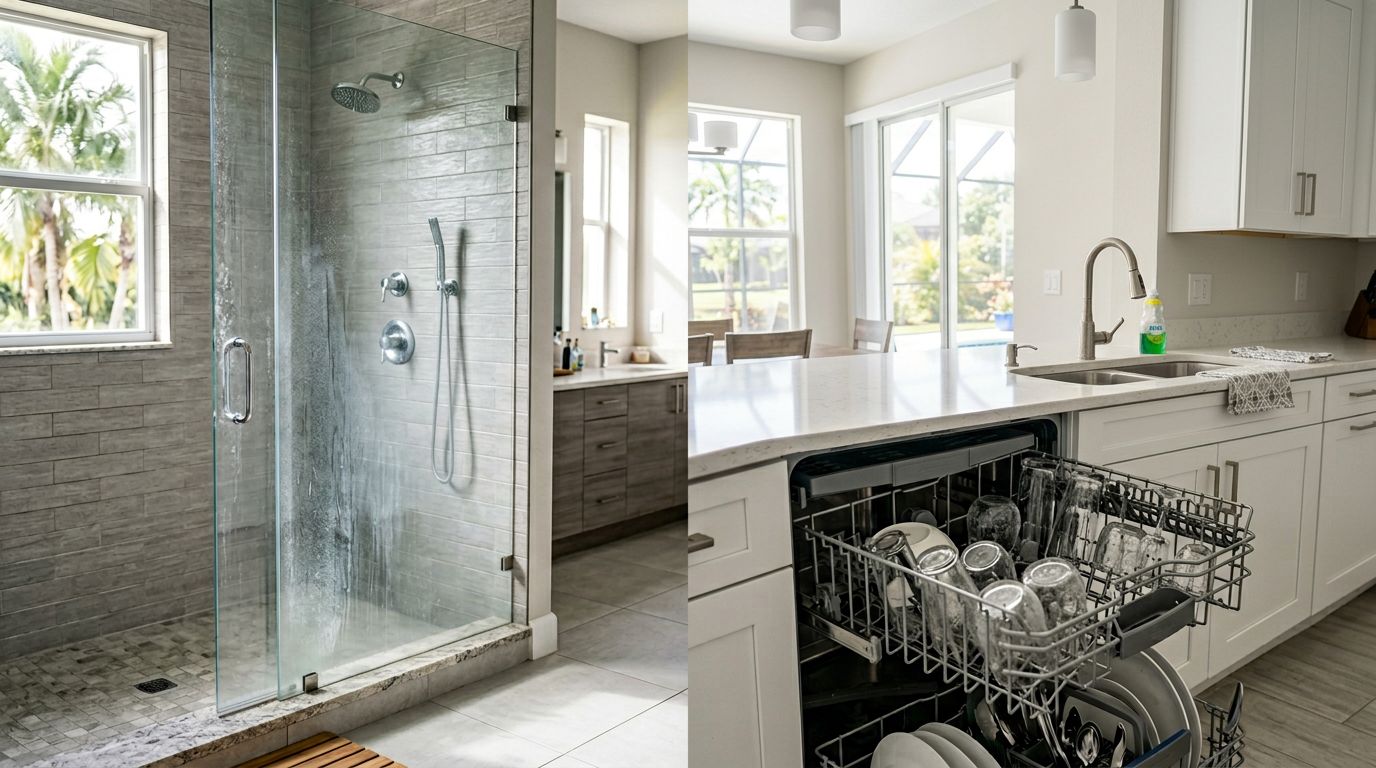
If your shower doors never look clean, your dishes come out spotty, or your "new" faucet already looks worn, you're not alone. Many Cape Coral homeowners deal with hard water signs that show up fast, especially in bathrooms and on appliances.
Hard water isn't usually dangerous, but it is annoying. Over time, mineral buildup can shorten the life of fixtures, reduce flow, and make cleaning feel pointless. The good news is you can spot the patterns early, clean the right way, and decide if prevention is worth it for your home.
Hard water in Cape Coral, what it looks like day to day
Hard water is water with dissolved minerals, mainly calcium and magnesium. In Southwest Florida, those minerals often come from limestone in the groundwater supply. Even on city water, minerals can still be present, and they tend to leave clues wherever water dries.
A smart first step is to check the City of Cape Coral Consumer Confidence Report (water quality report). It won't "fix" anything, but it helps you understand what your utility is treating for, and why scaling can still happen.
Here's what hard water buildup usually looks and feels like around the house:
- Chalky white crust on showerheads, faucets, and handles
- Spots on glass shower doors and mirrors that come back within a day
- Soap scum that won't rinse clean , because minerals react with soap
- Stiff towels and scratchy sheets , even with the same detergent
- Lower flow at fixtures , often from clogged aerators or showerheads
- Appliances running "hotter" or longer , because scale acts like insulation
One detail matters: hard water leaves a dry, crusty residue. If you see green or blue staining, flaking metal, or pitting, that's often corrosion, not simple scale. Those cases deserve a closer look.
If wiping a surface leaves a gritty powder or chalk film, minerals are a strong suspect. If it looks like metal is being eaten away, don't treat it as "just hard water."
Hard water signs in showers and faucets (and what can mimic them)
Your shower is the perfect testing ground because water hits hot surfaces, splashes, then dries. As a result, minerals concentrate quickly on tile, glass, and chrome.
Common shower and faucet symptoms linked to hard water
A few signs show up again and again in Cape Coral bathrooms:
- Spray pattern goes wild : Showerhead jets start shooting sideways or misting unevenly.
- Hot water feels weaker : Flow drops, especially on the hot side, because hot water scales faster.
- Faucet aerator clogs : The stream loses its shape, then starts splashing.
- White rings at the base : Deposits form where water sits, like around handles and escutcheons.
If you're seeing these issues plus frequent dripping, grinding handles, or inconsistent mixing, it may be more than scale. This guide on common faucet problems in Cape Coral homes breaks down what's normal wear versus what needs a plumber.
Hard water vs other causes, a quick reality check
Some symptoms look like hard water but aren't. Use this table to narrow it down before you spend time descaling.
| Symptom | Often hard water | Often something else |
|---|---|---|
| White crust on showerhead, glass, or faucet base | Yes | Sometimes leftover cleaner residue |
| Sudden whole-house low pressure | Unlikely | PRV issue, valve partly closed, supply problem |
| One faucet low flow, others fine | Yes | Also a clogged cartridge or failing stop valve |
| Brown staining or metallic taste | Sometimes (iron) | Corroded pipes, water heater issues |
| Grit or sand in water after storms or work | Sometimes | Sediment disturbance, main flushing |
| Water bill jumps with no extra use | No | Hidden leak |
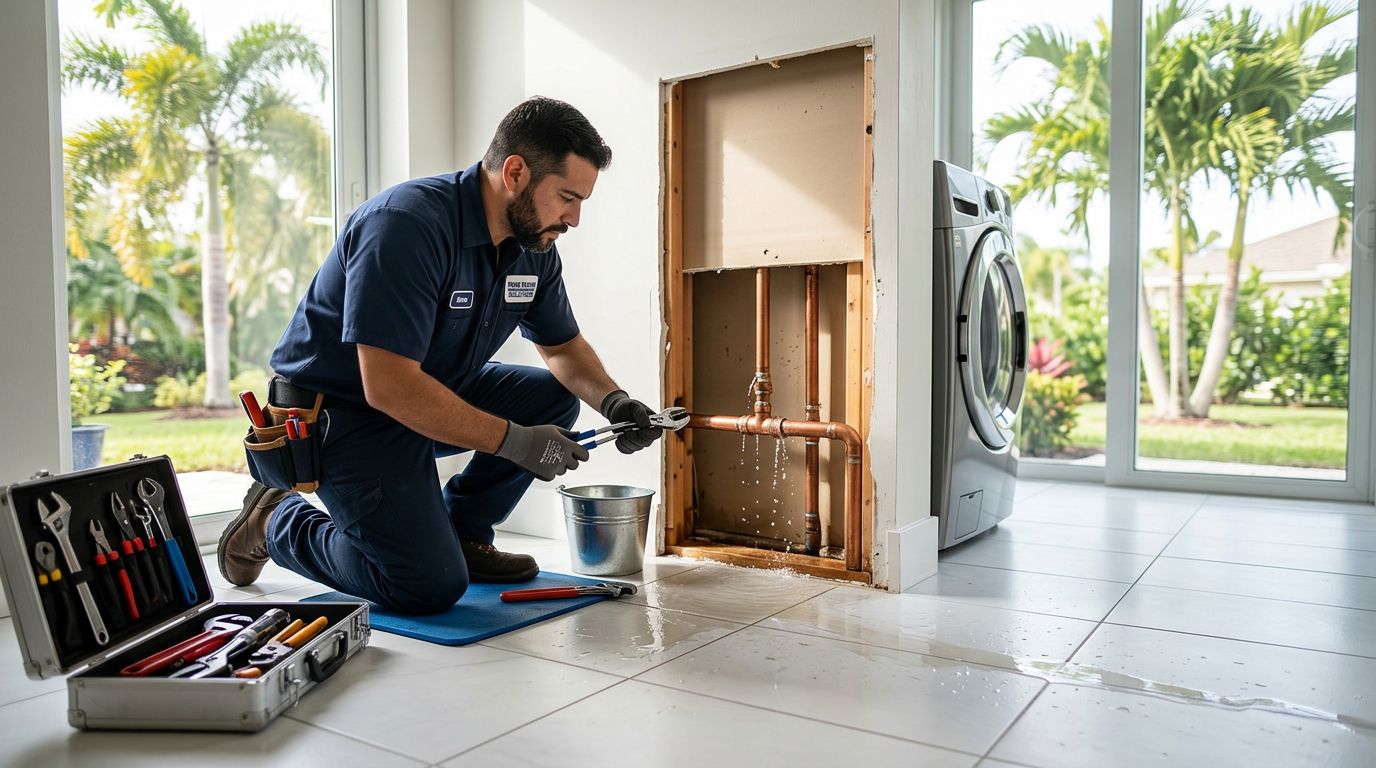
If pressure drops fast or you suspect a leak, it's safer to verify first. Professional leak detection in Cape Coral can rule out hidden plumbing problems that scale cleaning won't fix.
Step-by-step descaling for showers, dishwashers, and water heaters
Descaling works best when you do it gently and regularly. In most homes, plain white vinegar handles routine mineral buildup. Use stronger products only when needed, and always follow label directions.
Showers, faucets, and showerheads (simple vinegar method)
- Protect the finish. Test vinegar on a hidden spot first, especially on brushed or specialty finishes.
- Soak the showerhead. Fill a bag with vinegar, secure it around the head, and soak 30 to 60 minutes.
- Scrub carefully. Use a soft toothbrush on nozzles and around faucet bases. Avoid abrasive pads.
- Flush the line. Run hot water for 1 to 2 minutes to clear loosened debris.
- Clean the aerator. Unscrew it, soak 20 minutes, then rinse and reinstall.
If a shower valve still feels stiff after cleaning, scale may be inside the cartridge, or the part may be worn. At that point, a repair beats repeated soaking.
Dishwasher: remove film, protect the pump, and improve drying
- Clean the filter first. Pull it out (check your manual), rinse, and remove any debris.
- Run a hot cycle with a descaler. You can use a dishwasher-safe descaling product, or vinegar if your manufacturer allows it.
- Wipe the door gasket. Minerals and detergent sludge collect there and cause odors.
- Adjust detergent and rinse aid. Hard water usually needs rinse aid to reduce spotting.
- Repeat every 1 to 3 months if you see white film or cloudy glassware.
If dishes are gritty instead of spotty, that can be sediment, not hardness. If the dishwasher isn't filling fully, the inlet valve may be failing.
Water heater: scale warning signs and safe flushing basics
Scale in a tank water heater can cause popping noises, slow recovery, and higher energy use. In a tankless unit, it can reduce flow and trigger error codes.
Before any water heater maintenance, keep safety first.
Turn off power at the breaker for electric heaters. For gas, set the control to the off position. Let water cool if needed, and don't open anything if you're unsure.
A basic tank flush (for many homes) looks like this:
- Shut off power or gas , then close the cold-water supply valve.
- Connect a hose to the drain valve and run it to a safe drain area.
- Open a hot faucet in the home to relieve pressure.
- Drain and flush until water runs clearer (short bursts of cold water help stir sediment).
- Refill the tank completely before turning power back on.
If the drain valve is stuck, the tank won't drain, or you see signs of corrosion, schedule service. A mistake here can damage the heater.
A practical maintenance schedule for Cape Coral homes
- Weekly : Squeegee shower glass, quick wipe of fixtures to prevent spotting.
- Monthly : Clean faucet aerators, wipe showerhead nozzles.
- Every 1 to 3 months : Dishwasher descaling cycle (based on spotting).
- Yearly : Water heater inspection and flush (or tankless descaling).
If you're tired of constant cleaning, long-term prevention may pencil out. A whole-home setup can reduce scale and protect appliances, although the best option depends on your water and plumbing layout. This breakdown of whole home water filtration cost in Cape Coral helps you weigh the investment against the time, repairs, and appliance wear you're already paying for.
Conclusion
Hard water problems often start small, then turn into daily friction, cloudy glass, weak shower flow, and appliances that don't last. Once you know the most common hard water signs , you can clean smarter, not harder, and avoid chasing the wrong issue.
If symptoms don't improve after descaling, or pressure and bills change suddenly, it's time to get a professional diagnosis. A quick inspection can tell you whether you're dealing with mineral scale, a failing part, sediment, or a hidden leak.


Get a Free Estimate
Got a plumbing issue? We’re here to help! Whether you need emergency repairs, routine maintenance, or have a question about our services, our team is ready to assist you.