
High Water Pressure in Cape Coral Homes, How to Test Your PSI, What’s Normal, and When You Need a Pressure-Reducing Valve (PRV)
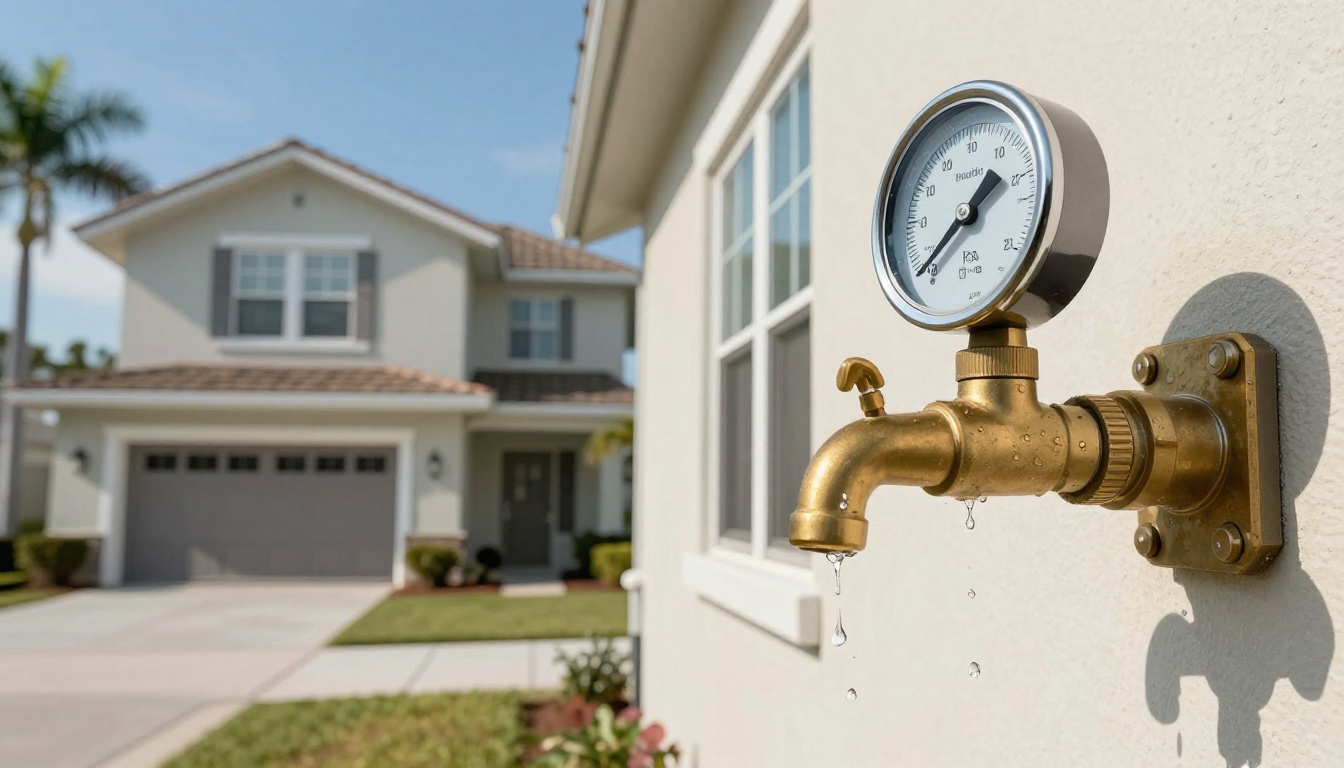
If your shower feels like a pressure washer, you’re not imagining it. Water pressure Cape Coral homeowners get from municipal lines (or from a well and pump setup) can run higher than what your plumbing fixtures were built to handle.
High pressure can feel great for a week, then it starts costing you. Toilet fill valves wear out, faucet cartridges drip, washing machine hoses bulge, and small leaks turn into bigger ones. The good news is you can test your PSI in minutes, and you’ll know whether a pressure-reducing valve (PRV) is the right fix.
Why high water pressure causes problems (even if nothing’s “broken” yet)
Water pressure is like air pressure in a tire. A little low is annoying, a little high might seem fine, but too high stresses everything all the time.
Most homes run best when pressure is steady and controlled. The issue in many Cape Coral neighborhoods isn’t just “high pressure,” it’s pressure swings . Your house may be fine at noon, then spike late at night when demand drops and pressure in the main rises. Those spikes are what quietly damage valves, supply lines, and appliance internals.
Here are common signs the pressure is higher than it should be:
- Your faucets “snap” off and you hear banging or rattling (water hammer).
- Toilet fill valves hiss, chatter, or fail often.
- You get random dripping at faucets or showerheads.
- Appliances with solenoids (ice maker, dishwasher) start leaking early.
- Outdoor hose bibs spray aggressively, and hoses don’t last.
Static vs. flowing pressure in plain English
- Static pressure is the PSI when no water is running. This is the number used for most code limits and PRV settings.
- Flowing pressure is the PSI while water is running. It will usually drop, sometimes a lot, depending on pipe size, restrictions, and overall system condition.
A home can have “acceptable” flowing pressure but still have static pressure that’s too high, especially overnight.
For general reference, many plumbing standards cap residential pressure at 80 PSI . You can see that limit referenced in code language like the Florida Residential Code section on water pressure limits. If your static pressure is over 80, it’s time to take it seriously.
How to test your PSI in Cape Coral (static, flowing, and overnight spike check)
You don’t need special tools. A basic water pressure gauge from a hardware store is usually under $15. Look for one that reads 0 to 200 PSI and threads onto a standard hose connection.
Step-by-step PSI test (using a hose bib gauge)
- Pick the right test spot. Use an outdoor hose bib, or a laundry sink faucet with hose threads, as close to where water enters the home as possible.
- Make sure no water is running. Turn off sprinklers, don’t run the dishwasher, and confirm nobody’s using a sink or shower.
- Thread the gauge on by hand. Snug it up, no need to over-tighten.
- Open the hose bib fully. The gauge should jump to your static pressure .
- Write the number down. This is your baseline PSI.
- Check flowing pressure. Leave the gauge on, then turn on a nearby faucet (like a tub spout) and watch the gauge. The PSI drop you see is your flowing pressure behavior.
- Do the overnight spike test. With all water off, leave the gauge installed overnight (or at least 4 to 8 hours). In the morning, read it before anyone uses water. If the number is higher than your baseline, you’re seeing a pressure spike .
- Watch for “creeping” pressure. If the needle slowly climbs while no one uses water, that can point to a failing PRV (if you already have one) or thermal expansion issues near the water heater.
If you’re on a well or have an irrigation booster pump, test with that equipment both off and on . A misadjusted pressure switch or booster pump can push pressure into the danger zone fast.
What PSI is normal, what’s too high, and when a PRV makes sense
For most homes, these ranges are a practical guide:
- 40 to 60 PSI: The sweet spot for comfort and fixture life.
- 60 to 80 PSI: Often usable, but it’s harder on fixtures, and spikes can push you over the limit.
- Over 80 PSI (static): Too high for a home, and commonly treated as requiring pressure reduction.
- Over 90 to 100 PSI: Expect frequent leaks and valve failures, even if the plumbing is newer.
If your static pressure is over 80 PSI, a PRV is usually the cleanest fix. A PRV installs on the main water line and reduces incoming pressure to a steady setpoint, even when the city pressure fluctuates.
Recommended PRV setpoint for most Cape Coral homes
A solid target is 55 PSI . In real homes, that range (about 50 to 60) keeps showers comfortable while taking stress off supply lines, toilets, and appliance valves.
After a PRV is installed, the pressure should stay stable. If it won’t hold steady, or you see pressure “creep” upward after periods of no use, the PRV may need adjustment or replacement.
One more local tip: if you want the most accurate “normal” guidance for your neighborhood, confirm pressure expectations with your local utility in Cape Coral or Lee County, since zones and operating conditions can vary.
Also, if high pressure has already damaged older piping, you may be looking at repairs beyond a PRV. For homes with aging lines, it helps to understand how much to repipe a house in Cape Coral so you can budget realistically.
Related fixes that often go with a PRV (plus a quick troubleshooting table)
A PRV solves the “incoming pressure is too high” problem, but it can change how the rest of the system behaves.
Thermal expansion tanks (especially after a PRV)
When a PRV is added, it often creates a more “closed” system. When the water heater heats water, it expands. If that pressure has nowhere to go, pressure can spike even with a PRV installed. That’s when a thermal expansion tank becomes important, particularly if you see pressure rise after the water heater runs.
Water-hammer arrestors and fast-closing valves
If you hear banging when a washing machine stops filling, or a toilet shuts off with a thud, a water-hammer arrestor can protect pipes and valves. High pressure makes water hammer louder and more destructive, so pressure control and hammer control work well together.
Irrigation and booster pump checks
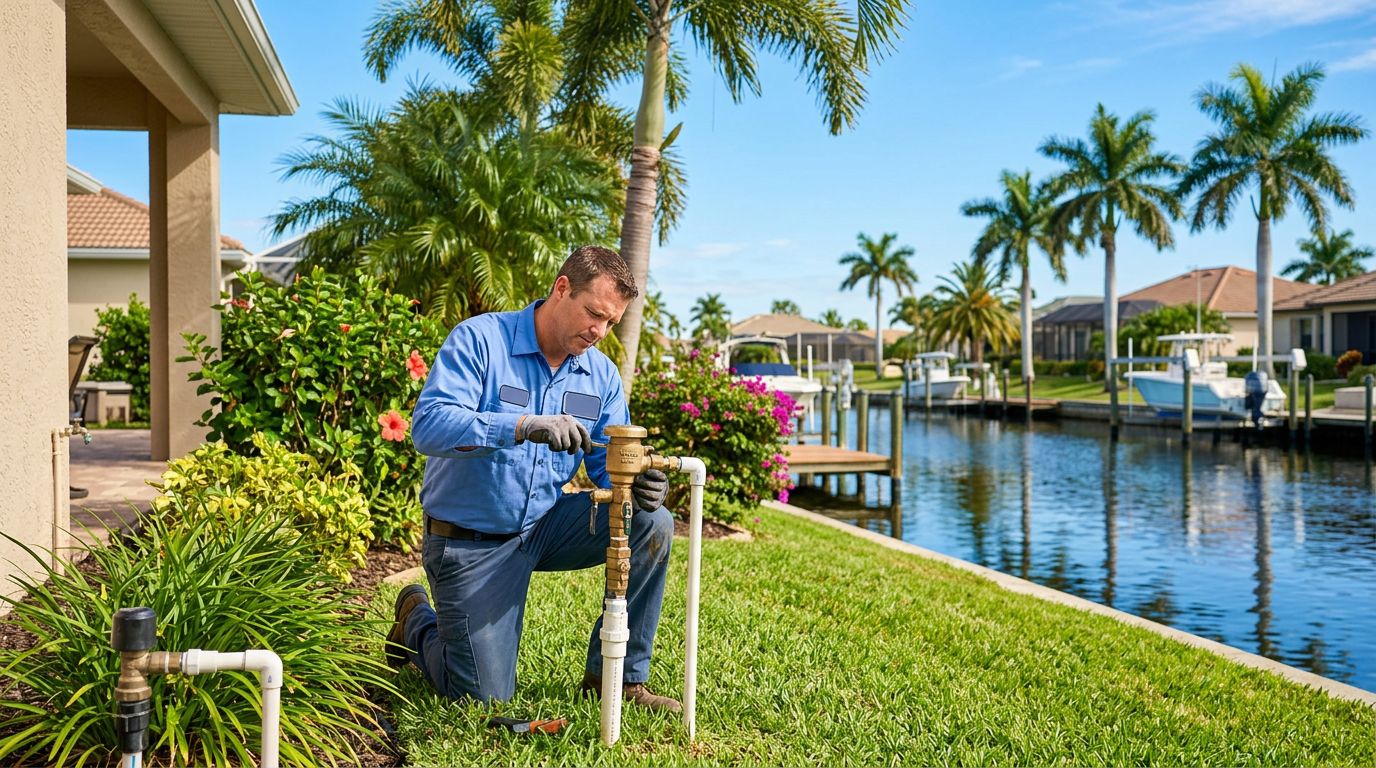
Cape Coral properties often have irrigation systems, and some setups include pumps. If irrigation was tied in incorrectly, or a booster pump is misadjusted, you can get strange pressure behavior. Also, make sure irrigation backflow protection is installed and maintained based on local requirements. For background on cross-connection and backflow expectations in the area, see Lee County’s cross-connection control policy.
Quick troubleshooting table (symptom, likely cause, what to do)
| Symptom | Likely cause | What to do |
|---|---|---|
| Shower stings, faucets blast | Static PSI too high | Test PSI, consider PRV set around 55 PSI |
| Random faucet drips, toilet parts fail often | High pressure wearing seals | Lower pressure, replace worn valves/cartridges |
| Loud bang when washer stops | Water hammer, high pressure | Add hammer arrestor, verify PRV setting |
| PSI reads higher in the morning | Overnight pressure spike | Install PRV, verify no booster pump issues |
| PSI “creeps” up when no water runs | Failing PRV or thermal expansion | Call plumber, check PRV and expansion tank |
| Pressure changes when irrigation runs | Pump or irrigation tie-in issue | Inspect irrigation valves, pump settings, backflow |
Safety and legal note (when to call a licensed plumber)
If pressure is excessively high , if a PRV is leaking or not holding pressure , or if the water heater is involved (relief valve dripping, expansion concerns, or any signs of overheating), it’s time to call a licensed plumber . These repairs affect safety devices and code compliance, and a small mistake can create flooding or scalding risk.
Conclusion
High water pressure isn’t just an annoyance, it’s constant stress on your whole plumbing system. Test your PSI, check for overnight spikes, and treat 80 PSI as the line where you should stop guessing and start fixing. For many homes, a PRV set around 55 PSI , plus the right add-ons like an expansion tank or hammer arrestors, is the difference between steady performance and repeat repairs. If your readings are high or unstable, getting a plumber involved now can save you from the next “mystery leak” later.
Get a Free Estimate
Got a plumbing issue? We’re here to help! Whether you need emergency repairs, routine maintenance, or have a question about our services, our team is ready to assist you.