How to Find and Label Your Main Water Shutoff Valve in a Cape Coral Home (simple room-by-room checklist)

A small leak can turn into a soaked cabinet, ruined flooring, and a big repair bill fast. The quickest way to stop the damage is knowing exactly where your main water shutoff valve is, and being able to shut it off without guessing.
Cape Coral homes often have a few “lookalike” valves (irrigation, softeners, hose bib shutoffs, city-side curb stop). This guide gives you a simple room-by-room search, a quick test to confirm you found the right one, and an easy way to label it so anyone in the house can act fast.
First, know what you’re looking for (and what it’s not)
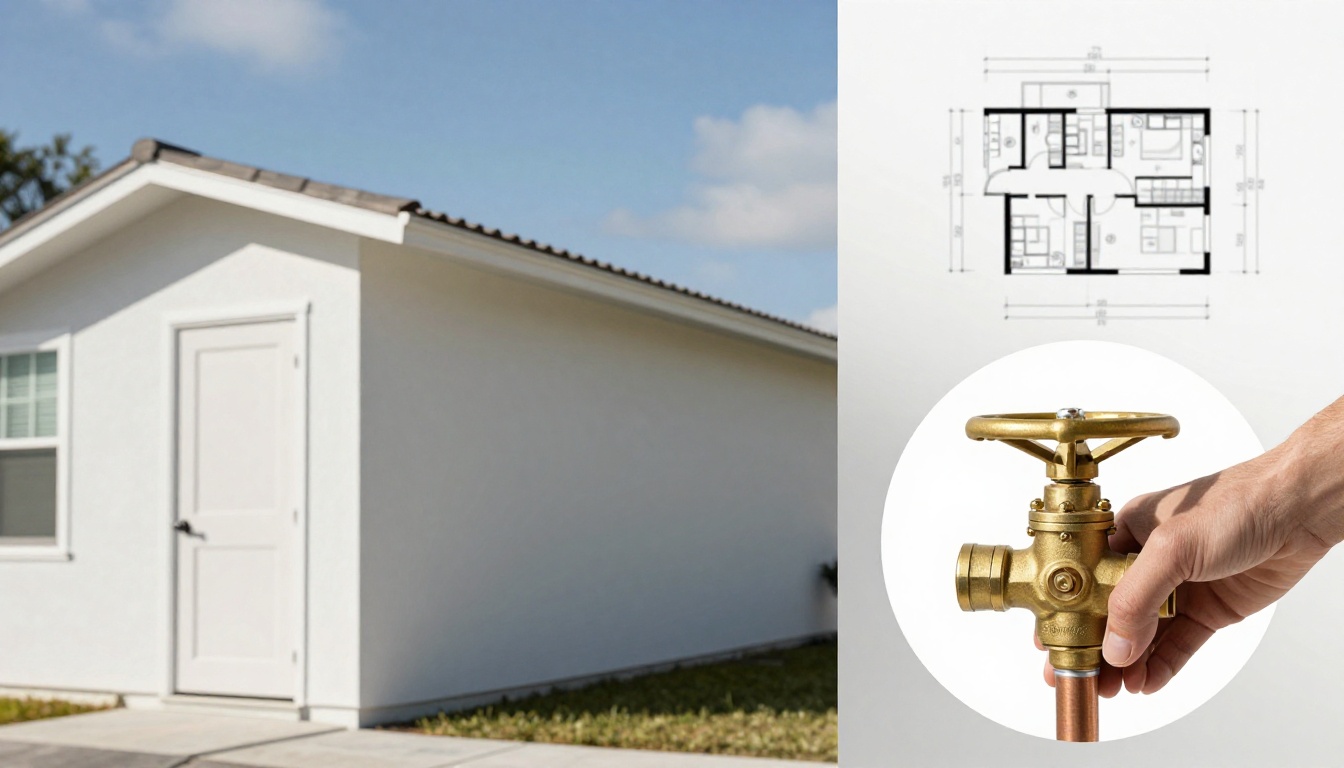
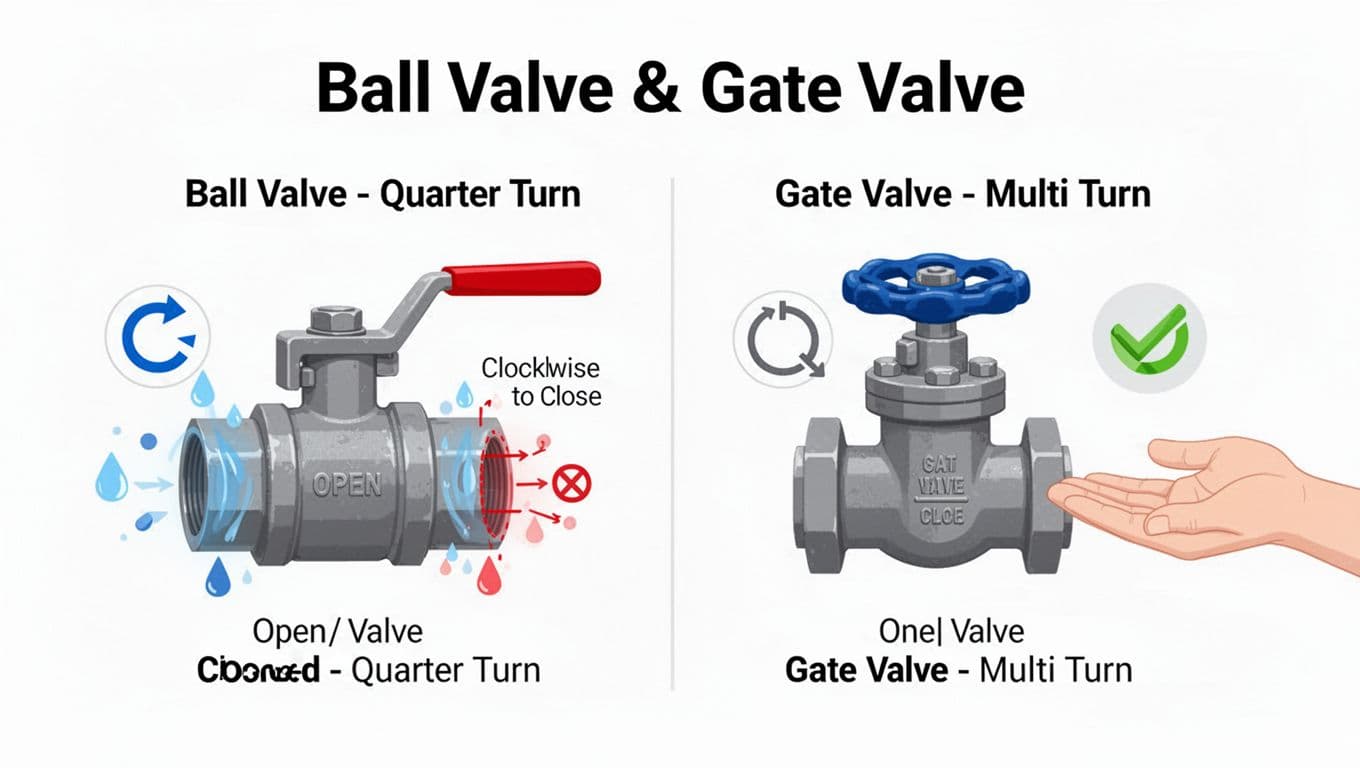
Ball valves shut off with a quarter-turn, gate valves take multiple turns, created with AI.
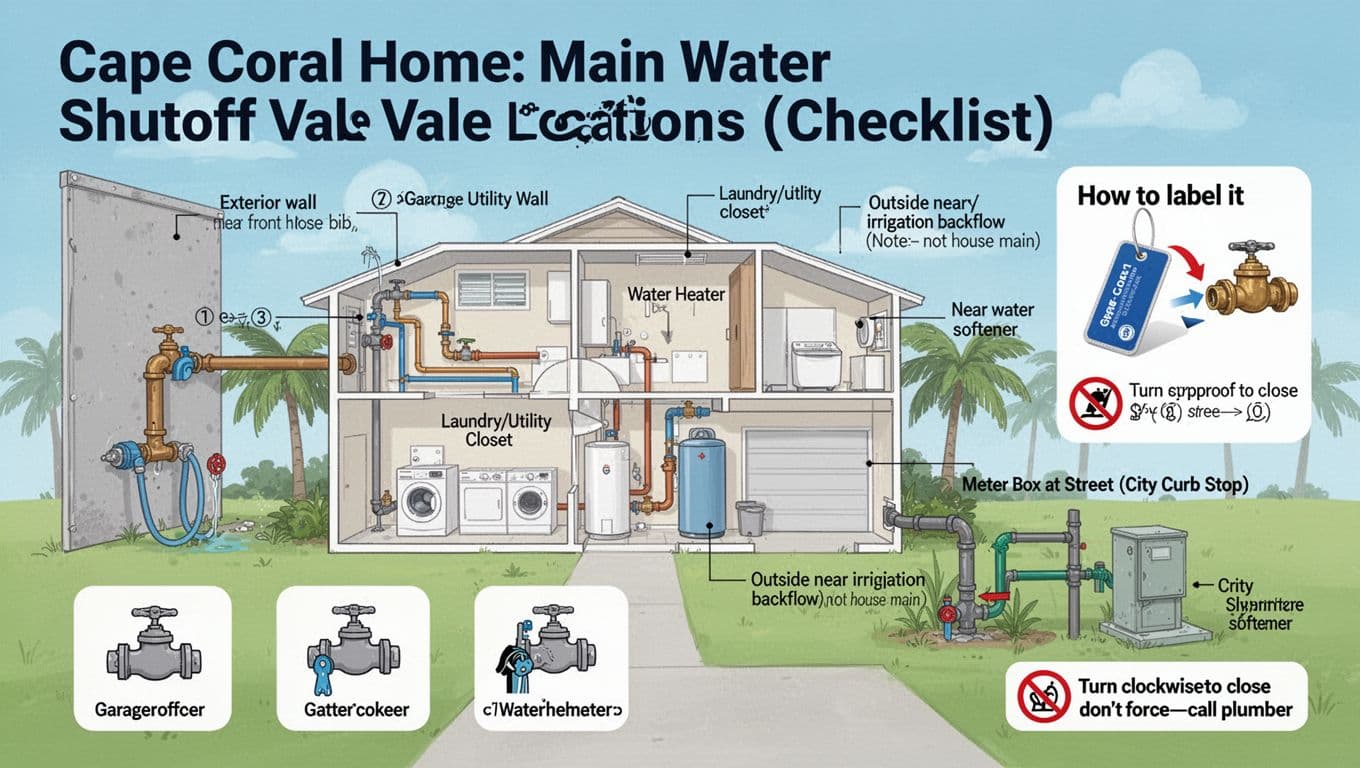
Your main shutoff is usually on the pipe that brings water into the house. In many Florida slab homes, it’s not in a basement (because there isn’t one). It’s commonly on an exterior wall, in the garage, or near a utility area where the plumbing first becomes “house plumbing.”
Quick valve ID: ball vs gate (the feel matters)
A shutoff is usually one of these:
- Ball valve (best case) : A straight lever handle. It shuts off with a quarter-turn . Handle parallel to the pipe usually means ON, perpendicular usually means OFF.
- Gate valve (older style) : A round wheel handle. It closes clockwise but takes multiple turns. These can seize up with age, so don’t force it.
If you’re unsure about typical shutoff locations, this general overview from The Spruce’s guide to main water shutoff valves is a helpful reference.
What people confuse with the main shutoff
In Cape Coral, it’s common to see valves that are important, but not the house main:
- Irrigation/backflow valves : These control sprinklers, not the sinks and showers.
- Water softener/filtration bypass valves : These may shut off or reroute water through equipment only.
- Fixture shutoffs : Toilet and sink stops shut off one fixture, not the whole home.
Keep the goal simple: find the valve that stops water to the entire house.
Cape Coral room-by-room checklist to find the main shutoff
Common shutoff locations in a Cape Coral style home layout, created with AI.
Before you start, grab a flashlight and clear a little access. You’re looking for the first full-home valve after the line enters the building.
Exterior wall near the front hose bib or main entry wall
Walk the outside perimeter slowly and look for plumbing coming through the wall.
- Check near the front hose bib/spigot for a valve on a pipe going into the wall
- Look for a valve near a pressure regulator (bell-shaped device)
- Scan for a valve inside a small exterior access area (if your home has one)
- Make sure it’s on the house supply line , not a sprinkler line
Garage utility wall (common in SWFL slab homes)
In many homes, the plumbing routes through the garage where it’s protected.
- Look along the wall facing the street or closest to the meter line path
- Check near where the pipe rises up and branches to the house
- Look for a lever or wheel valve before any tees feeding the home
- Confirm it’s not only feeding a laundry sink or hose bib
Laundry room or utility closet
If your laundry is near the plumbing entry, the main shutoff may be close.
- Check behind or next to the washer box area for a larger shutoff on the main line
- Look low on the wall near baseboards where a main line may come up
- Identify if you’re seeing washer-only hot/cold valves (not the main)
Water heater area or mechanical closet
This is a high-traffic plumbing zone, so builders often place valves nearby.
- Look on the cold-water line feeding the water heater, then trace backward
- Check for a main shutoff before the line splits to cold fixtures
- Don’t confuse the water heater cold inlet valve with the whole-house shutoff
Near water softener or filtration loop (if installed)
Equipment adds valves, and that can hide the real main.
- Find the equipment loop, then look upstream for a single valve before the loop
- Identify bypass valves (they change flow through the unit, not shut off the house)
- If there’s a manifold, look for the one valve that feeds everything
Meter box at the street or sidewalk (city-side shutoff)
Many homes have a shutoff at or near the meter box. This is often called a curb stop and may need a meter key. For city context, see the City of Cape Coral Utilities Collection & Distribution Division page. If your neighborhood is going through city water and sewer work, the City’s UEP connection info is also worth bookmarking: UEP “How to Connect”.
- Locate the meter box and identify the shutoff on the city side
- Only turn what you can access safely, don’t force stuck parts
- Treat this as city side , your preferred everyday shutoff is usually at the house
- If you need a visual, this general demo shows the concept: how to locate a water meter and shutoff
Confirm the correct valve, then label it so there’s no doubt
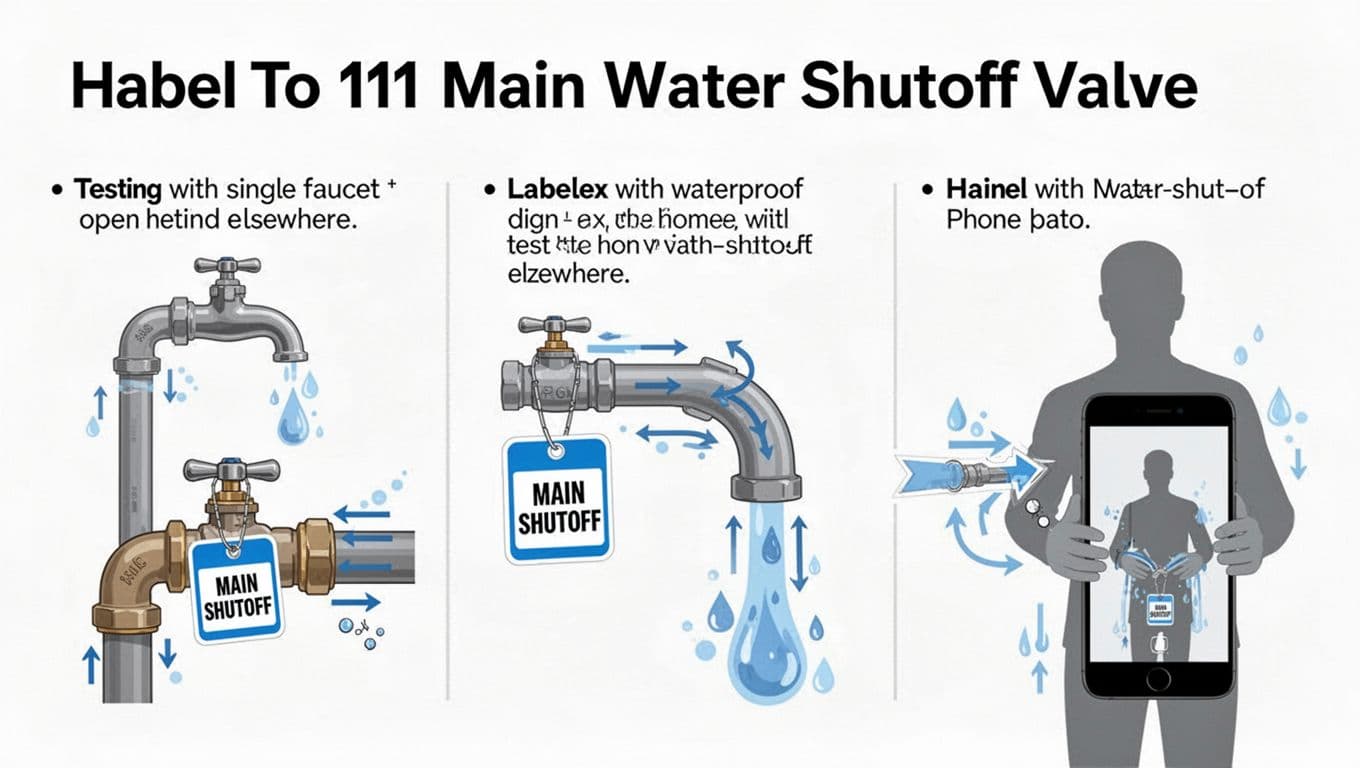
Testing and labeling steps so the right valve is obvious in a hurry, created with AI.
Finding a promising valve is only half the job. Now you need to prove it stops the whole house.
The single-faucet test (simple and reliable)
- Pick one faucet inside (a tub spout works well) and turn cold water on to a steady stream.
- Have a second person stand at that faucet and watch the flow.
- At the suspect valve, close it slowly.
- Ball valve: turn the lever a quarter-turn to OFF.
- Gate valve: turn clockwise, stop if it binds hard.
- Wait up to 30 to 60 seconds. The flowing faucet should slow, sputter, then stop.
- Open one other cold faucet quickly. If nothing comes out, you found the main.
If water keeps running like normal, you closed the wrong valve (or there’s another feed you haven’t found).
Label it in a way that holds up in humidity
Use materials that won’t fall off or smear.
- Attach a weatherproof tag (plastic tag or laminated label) that says “MAIN WATER SHUTOFF.”
- Add a bold arrow on the wall or pipe showing the OFF direction (clockwise for many valves, quarter-turn direction for ball valves).
- Write quick notes on the tag: “Whole house,” plus any tool needed (example: “Needs wrench”).
- Take a clear phone photo showing the valve and the surrounding area (so you can find it later). Save it in a “Home” album.
After you turn water off and back on, do this to avoid surprises
Turning water back on too fast can stir up air and debris.
- Turn the valve ON slowly .
- Open the highest faucet in the home first (often a bathroom sink) and let it run until sputtering stops.
- Run a tub faucet for a minute to flush air.
- Check for leaks at the valve, under sinks, behind toilets, and at the water heater connections.
- If you have appliances that use water, run a short cycle or dispenser after flow is steady.
A good habit is to exercise the valve once or twice a year so it doesn’t seize. If you want a broader routine, this internal guide is a solid reference for periodic checks (including valves): Essential Plumbing Maintenance Checklist for SWFL Businesses.
Conclusion
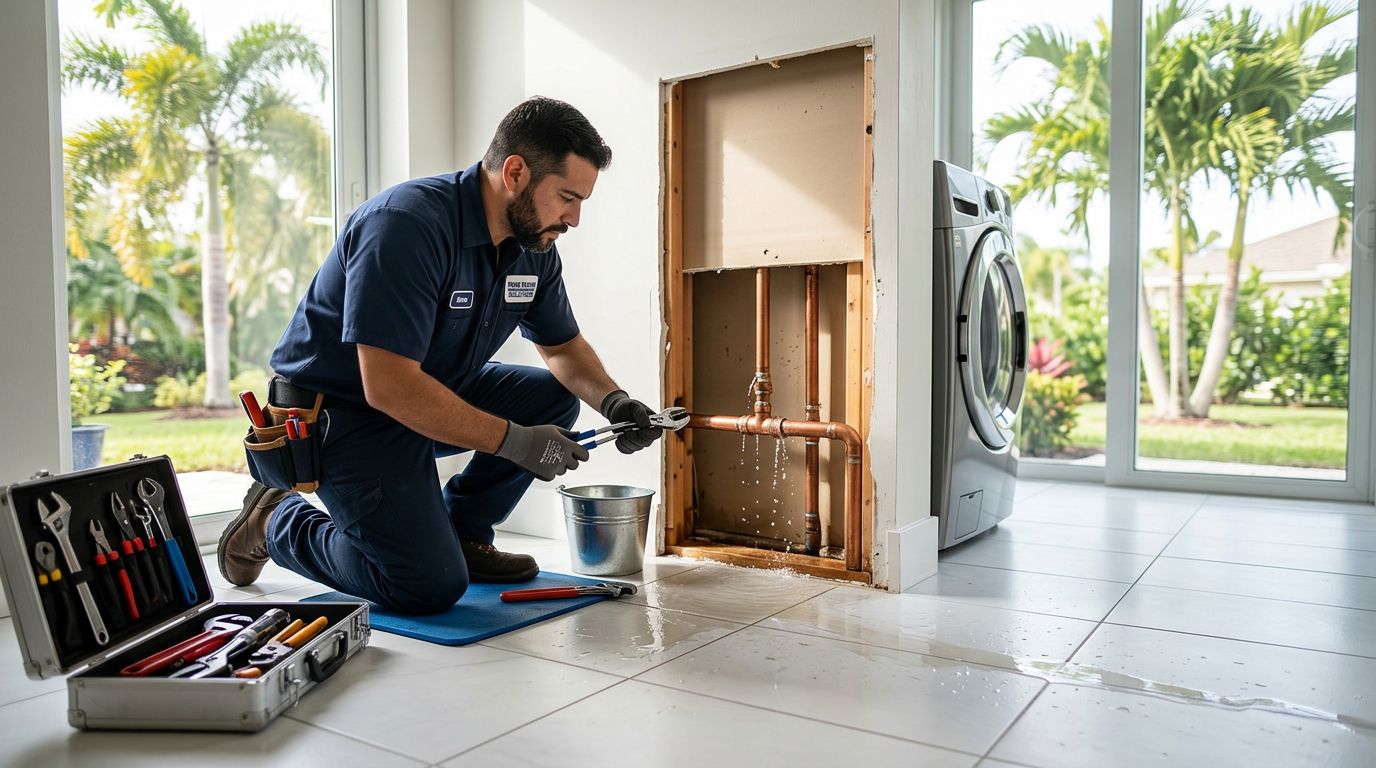
Knowing where your main water shutoff valve is gives you control when a pipe bursts, a toilet won’t stop running, or a hose bib snaps. Use the room-by-room search to find it, confirm it with the single-faucet test, then label it so clearly that anyone can shut it off in seconds. If the valve won’t budge or looks corroded, don’t force it; getting it replaced now can prevent a bigger emergency later.


Get a Free Estimate
Got a plumbing issue? We’re here to help! Whether you need emergency repairs, routine maintenance, or have a question about our services, our team is ready to assist you.