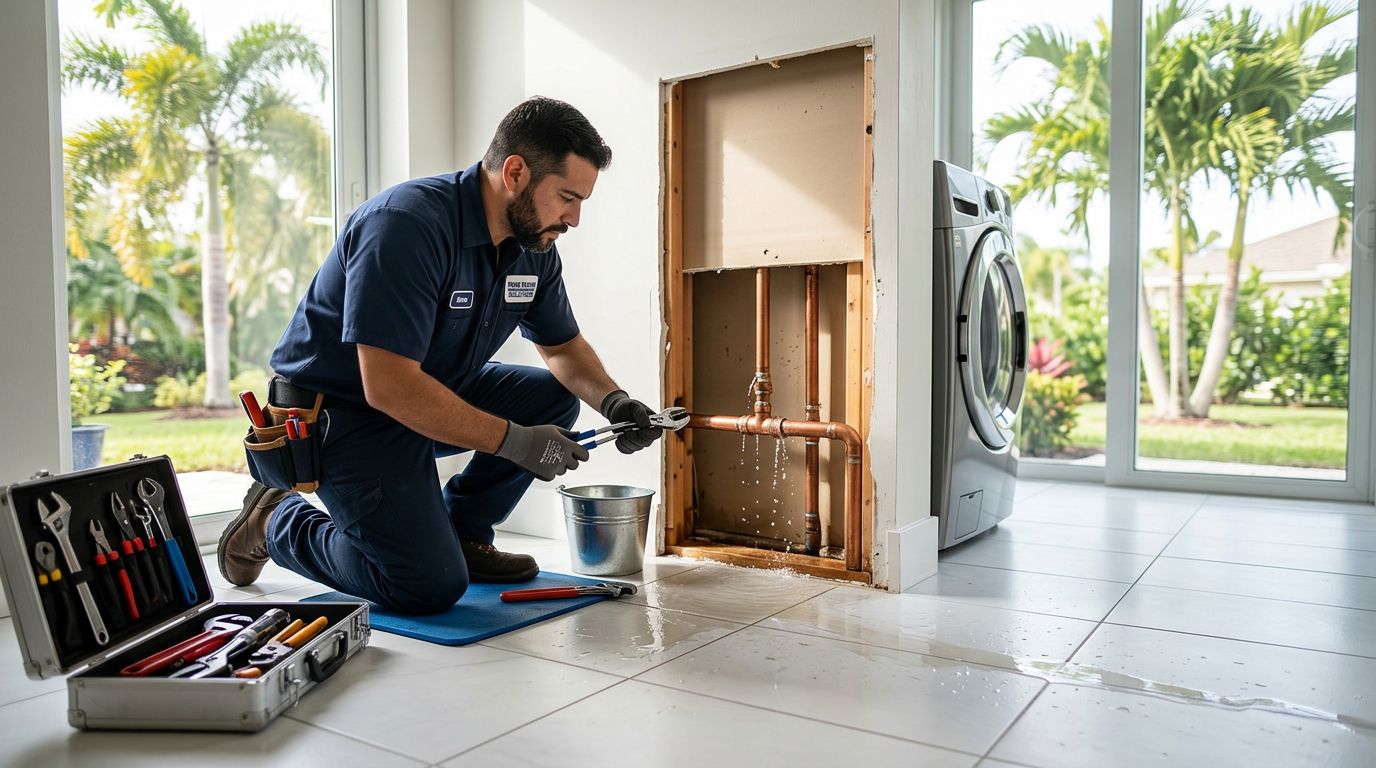
Tankless or Tank Water Heater for Cape Coral Homes?

Tankless or Tank Water Heater for Cape Coral Homes?

Running out of hot water after two showers is frustrating. Replacing the heater with the wrong type is worse, because you may overpay up front or end up with a system that doesn't match your daily routine.

For Cape Coral homeowners, the tankless vs tank heater decision comes down to usage, water quality, and install cost . Florida's warm climate helps both types, but hard water, utility bills, and local code rules can swing the answer.

What changes the decision in Cape Coral

Cape Coral isn't dealing with icy groundwater or winter basements. Because incoming water is warmer here, both systems need less energy to reach shower temperature. That gives tankless units a fair chance, especially when they're sized correctly for the home.

Hard water complicates things. Minerals settle inside tank heaters and can coat the heat exchanger in tankless models. A tank will usually keep working with some sediment, although efficiency drops over time. A tankless unit is less forgiving and often needs yearly descaling. If you already see hard water effects on Cape Coral appliances , your water heater is probably dealing with the same buildup.

Daily demand matters just as much. Many Cape Coral homes have clustered hot-water use, morning showers, dishes, and a load of laundry close together. A tank heater gives you a set amount of stored hot water at once. A tankless heater keeps heating on demand, but only up to its flow limit. If several fixtures run together, an undersized unit can struggle.

Installation is the other big local factor. Swapping one tank for another is often straightforward. Going tankless may require a larger gas line, different venting, or major electrical work. That's why water heater installation in Cape Coral should be done by a licensed local plumber who handles permits and code compliance.

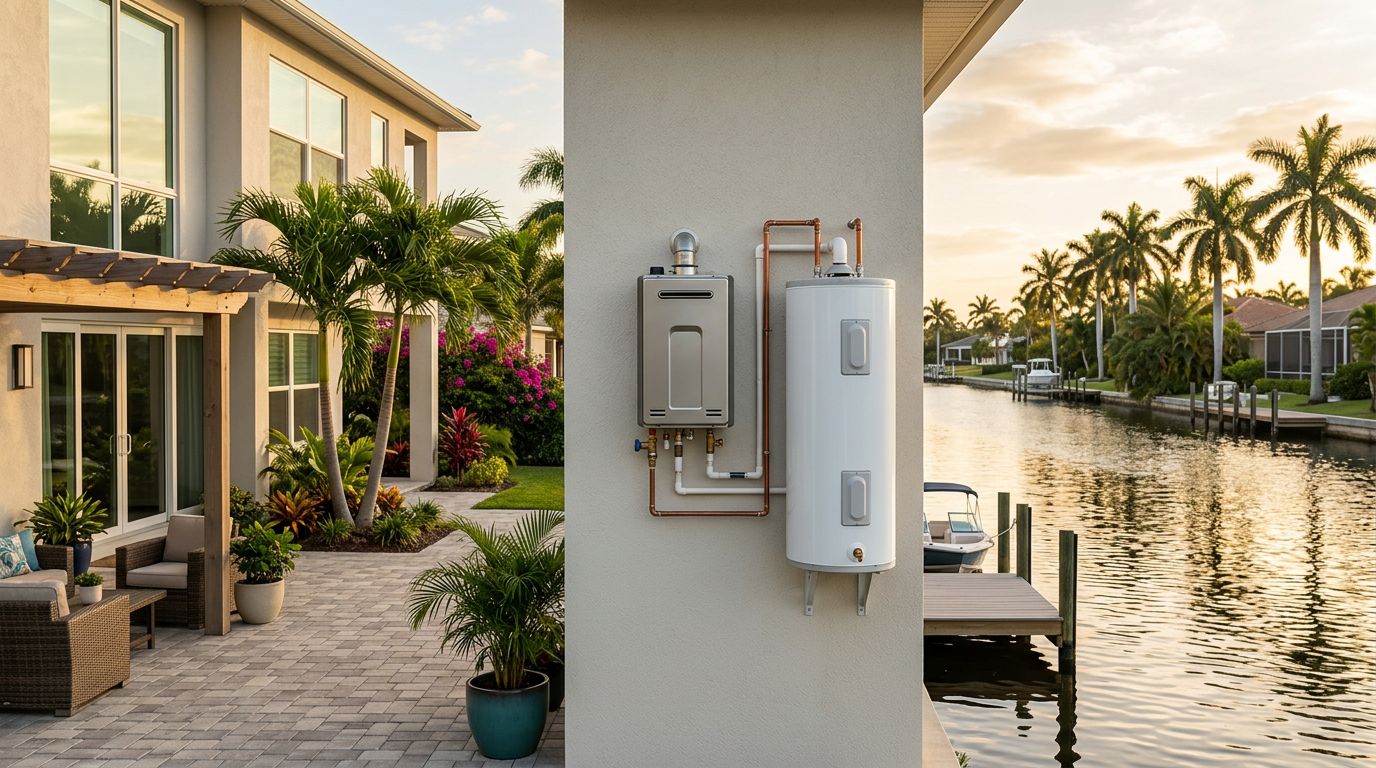
Tankless and tank water heaters side by side

This quick comparison shows where each option usually fits.

Feature Tank water heater Tankless water heater
Upfront price Lower Higher
Hot-water supply Limited by tank size Continuous, within flow limits
Energy use Has standby heat loss Heats water only when needed
Space Larger footprint Small wall-mounted unit
Hard-water care Flush sediment as needed Yearly descaling is common
Lifespan About 8 to 12 years About 15 to 20+ years

The main appeal of a tank heater is simple: lower first cost . It's also familiar, easy to replace, and usually less picky about installation conditions. For many households, that is enough.

Tankless units win in other ways. They save floor space, avoid standby loss, and usually last longer. They also solve the common complaint of running out of hot water, as long as the unit is sized for your busiest times.

Neither option is perfect. Tank models can run cold during back-to-back showers, and they take up room in a garage or closet. Tankless models cost more to install, and electric versions can demand serious panel capacity. Gas models may need vent and gas-line upgrades, which changes the budget fast.

Storm season can matter too. A tank keeps a set amount of water in reserve, while a tankless unit stores none. Neither is a backup plan, but some homeowners like having that small cushion during short outages.

For Cape Coral homeowners who watch monthly bills closely, the long-term math matters. Tankless heaters can cut energy use because they don't keep stored water hot all day. Still, that savings only looks good if the install price, maintenance, and expected time in the home all line up.

Cost, maintenance, and the best fit for your home

In 2026, a standard tank replacement in Cape Coral often lands around $900 to $2,500, depending on size, fuel type, access, and code updates. For a local price snapshot, the 2026 tank water heater pricing guide gives a useful baseline.

Tankless systems usually cost much more up front. In many Florida installs, $2,500 to $5,000 or more is realistic once venting, gas, or electrical upgrades are added. That gap is why many homeowners stick with a tank when a failed heater needs a fast replacement.

Maintenance can flip the decision. Tank heaters need sediment flushing, especially in mineral-heavy water. Tankless units often need yearly descaling, and some homes benefit from a softener or other water treatment. Skip that care, and efficiency drops, parts wear faster, and error codes become more likely.

The best fit usually looks like this:

  • A tank water heater is often best for homeowners who want the lower upfront price, a simpler swap, and fewer installation surprises.
  • A tankless water heater is often best for homeowners who plan to stay long term, want longer service life, and don't mind routine descaling or water treatment.

One last point matters more than brand names. Proper sizing decides whether either system feels reliable. If your home may run two showers, the dishwasher, and laundry together, the unit has to match that demand. A good local installer will check flow rate, fuel source, venting, and your real household habits before making a recommendation.

Conclusion

For many Cape Coral homes, tank heaters still make the most sense because they're cheaper to install and easier to live with in hard water. Tankless models are a strong choice when you want better efficiency, more compact equipment, and longer-term value.

The right answer is the one that fits your budget, your hot-water habits, and the condition of your plumbing and utility connections. Pick the system that matches your house today, not the one that sounds best on paper.

That choice usually saves more stress than chasing the cheapest sticker price.

By Infinity Plumbing April 24, 2026
You own a home in Cape Coral with an old well that's no longer in use. Now, you're wondering about the well abandonment cost and what it means for your wallet. Many locals face this when switching to city water through the Utility Expansion Project. Abandonment seals the well...
By Infinity Plumbing April 23, 2026
Slow drains turn into backups. Sewage smells linger in your yard. These signs hit Cape Coral homeowners hard because many older homes still rely on cast iron pipes. Buried under slabs or sandy soil, they rust and crack over time. Cast iron pipe replacement cost in 2026 starts...
By Infinity Plumbing April 22, 2026
Your pool water level drops overnight. You top it off, but it happens again. A faulty auto fill wastes water and strains your pump. In Cape Coral, pool auto fill repair cost averages $640 to $681 this year. Prices vary, though. Pool setup and access change the bill fast. Homeo...
By Infinity Plumbing April 21, 2026
A utility sink turns laundry day chaos into something manageable. You hose off muddy clothes or scrub tools without wrecking your kitchen. But when that sink needs replacing or installing, costs add up fast in Cape Coral homes. Many homeowners worry about surprises like hidden...

Get a Free Estimate

Got a plumbing issue? We’re here to help! Whether you need emergency repairs, routine maintenance, or have a question about our services, our team is ready to assist you.

GET PROFESSIONAL HELP