Water Heater Making Popping Noises in Cape Coral Homes: What It Means and What to Do

A water heater popping noise can sound like popcorn in the microwave, fast clicks, little bangs, then silence. In many Cape Coral homes, that noise is your water heater complaining about mineral buildup, not "just being old."
The good news is that popping is often fixable. The bad news is that ignoring it can shorten the heater's life and raise your power or gas bill. Below is a clear, safety-first way to figure out what's happening, what you can check yourself, and when it's time to bring in a plumber.
Why a water heater popping noise is so common in Cape Coral
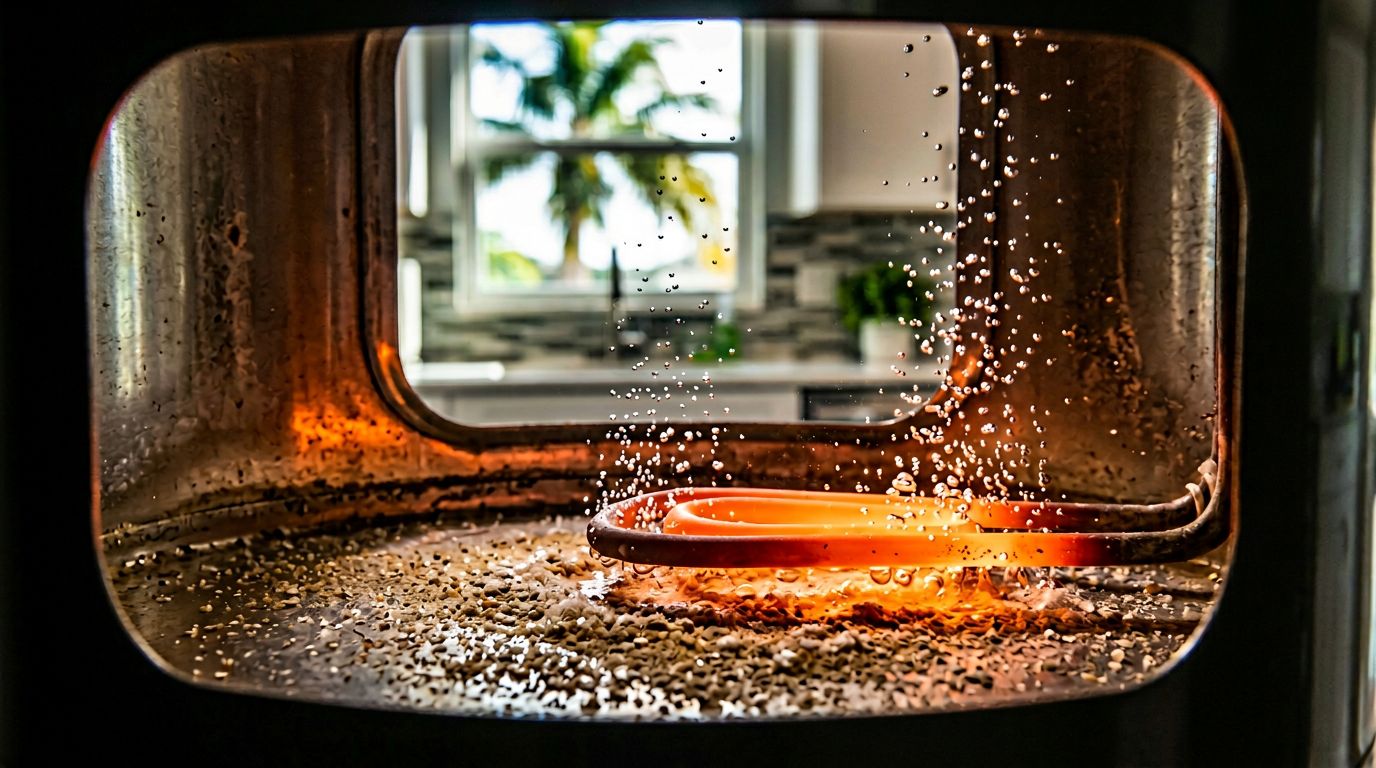
Most tank-style water heaters pop because hard-water minerals settle at the bottom of the tank. Over time, that sediment turns into a crusty layer. When the burner (gas) or element (electric) heats the tank, water trapped under that layer flashes into steam bubbles. Those bubbles "snap" as they break free, and you hear popping.
Cape Coral water conditions can make this show up faster than many homeowners expect. Mineral scale builds like plaque in an artery, slowly restricting heat transfer. As a result, the heater works harder, runs longer, and stresses parts that usually last years.
Not every noise means the same thing, though. Use this quick guide to separate normal-ish from urgent:
| Sound you hear | Most likely cause | How urgent is it? |
|---|---|---|
| Light popping or crackling during a heat cycle | Sediment or scale in a tank | Schedule maintenance soon |
| Deep rumble that lasts a long time | Heavy sediment, overheating at the bottom | Higher priority, don't ignore |
| Sharp banging or "hammer" sound in pipes | Water hammer, loose pipes, valve issues | Can become damaging, check soon |
| Hissing plus visible steam or water | Leak, overheating, or a failing valve | Treat as urgent |
If the noise gets louder week to week, the sediment layer is usually getting thicker, and the heater is paying the price.
Safety first, before you touch anything (power, gas, and scalding risks)
Even simple checks can go sideways if you rush. Hot water can burn skin fast, and a water heater has electricity, gas, pressure, or all three. If you plan to inspect anything beyond "look and listen," shut it down first.
Here's the safe baseline:
- Electric tank heater : Turn off the water heater breaker. Don't remove access panels unless you're confident it's off.
- Gas tank heater : Turn the gas control to the "OFF" setting. If you smell gas, leave the area and call for help.
- Any type : Assume the water in the tank is hot. Open a hot faucet carefully and keep your hands clear of splashing.
If you're not sure which breaker controls the heater, it helps to have a plan. This local guide is worth saving: Cape Coral emergency plumbing shutoff plan.
One more safety note that matters: Don't DIY a T&P valve replacement. The temperature and pressure relief valve is a critical safety device. If it's leaking or acting odd, get a licensed plumber involved.
What to do now (step-by-step) without risky DIY repairs
The goal here is simple: confirm it's sediment-related, rule out red flags, then decide between a flush and a service call.
- Listen for timing and location
Stand near the heater during a heating cycle. Popping from the tank body points to sediment. Banging in walls points to pipes or a valve snap. - Check for water on the floor and rust trails
Look around the base, fittings, and the top connections. Even a slow leak can cause corrosion, and corrosion can worsen noise and failure risk. If you suspect a hidden leak elsewhere, consider Cape Coral leak detection services. - Look at the T&P discharge pipe
The discharge pipe should be dry most of the time. If you see dripping, puddles, or staining, stop and call a pro. Pressure problems aren't a "wait and see" issue. - Compare electric vs gas clues
- Electric : Popping can come from sediment, but also from a struggling heating element. If the breaker trips, treat it as a red flag, not a nuisance.
- Gas : Rumble plus popping often means heavy sediment sitting over the burner area. Also check that venting looks intact and nothing is stored against the heater.
- Set the temperature to a safer range
Many homes do well around 120°F. Higher settings increase scale and scald risk. - Plan a tank flush (DIY only if you're comfortable)
A flush can reduce popping, especially when caught early. Still, draining a tank has real burn risk, and valves can stick. If you've never done it, it's reasonable to schedule service instead. For a maintenance checklist that fits Cape Coral conditions, use Water Heater Maintenance Tips Cape Coral. - Know how tankless units differ
Tankless heaters don't store sediment in a tank, so "popping" is less common. When they make noise, it's often scale in the heat exchanger or rapid changes in flow. Tankless systems usually need descaling on a set interval, especially with hard water.
If you'd rather skip the guesswork, a local plumber can confirm the cause and restore quiet fast. Start here: water heater repair in Cape Coral.
Call a pro if you notice these red flags (and how to prevent the noise long term)
Some symptoms mean you should stop troubleshooting and get help. Popping alone is often manageable. Popping plus the items below can point to a safety issue or an impending failure.
Call a pro if you have:
- Any leak around the tank, fittings, or from the ceiling above
- A rotten-egg smell (possible gas issue or water chemistry problem)
- A tripping breaker or scorched wiring smell near an electric unit
- No hot water , or hot water that swings from warm to cold
- T&P discharge (dripping or spurting from the relief line)
- Loud banging or hammering (not just light popping)
When a water heater starts "talking" in new ways, believe it. Noise is often the first warning, not the last.
Prevention that works in Cape Coral water
- Flush a tank heater at least once a year , and consider every 6 months if scale builds fast in your neighborhood or you're on a well.
- Check the anode rod every 2 to 3 years . A worn rod can speed up tank corrosion.
- Descale tankless systems yearly , and more often if you see scale at faucets.
- If hard water is a repeat problem, a softener can reduce scale in the heater and fixtures. Pricing and options are outlined here: water softener installation cost Cape Coral.
Conclusion
A water heater popping noise in a Cape Coral home usually points to mineral scale, and scale doesn't fix itself. Start with safe shutdown steps, rule out leaks and T&P discharge, then plan a flush or a service visit. With regular maintenance and hard-water control, most heaters run quieter, last longer, and waste less energy. If your heater's sound is getting sharper or paired with red flags, it's time to bring in a licensed pro.


Get a Free Estimate
Got a plumbing issue? We’re here to help! Whether you need emergency repairs, routine maintenance, or have a question about our services, our team is ready to assist you.