Why Your Cape Coral Home Smells Like Sewage Indoors

That cape coral sewage smell inside your home can stop you in your tracks. It's embarrassing, distracting, and it makes people worry something is "backing up" under the house.
Most of the time, the cause is simpler than you'd think. Sewer odor usually slips indoors when a water seal dries out, a toilet loses its seal, or a vent can't breathe. In Cape Coral, slab foundations, high humidity, a high water table, and homes that sit vacant for weeks can make those issues show up faster.
What you're smelling (and why it shows up indoors)
When people say "sewage smell," they're often smelling sewer gas . Sewer gas is a mix of gases from drain and sewer systems. The odor is commonly tied to hydrogen sulfide (the rotten-egg smell), but there can also be methane and ammonia-type odors.
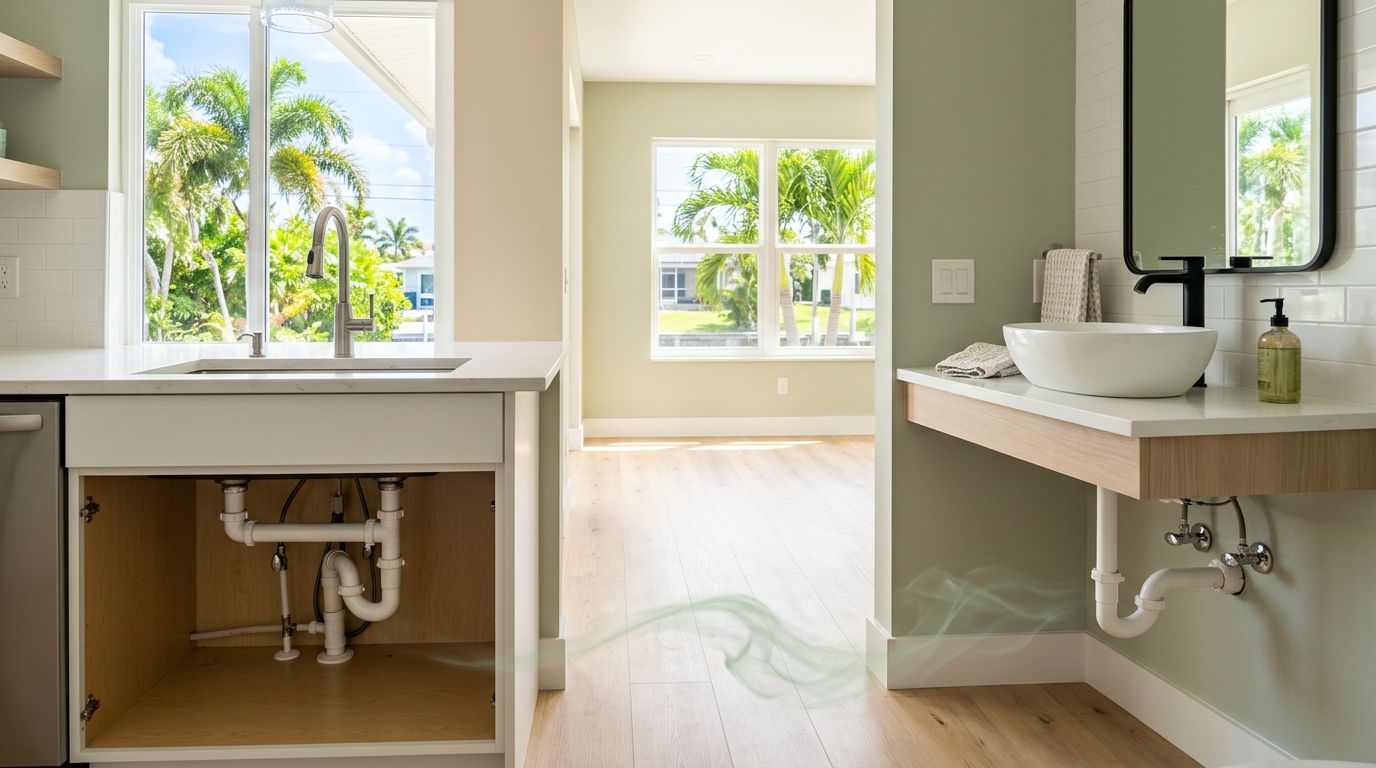
Your plumbing is designed to keep those gases out. Two parts do most of the work:
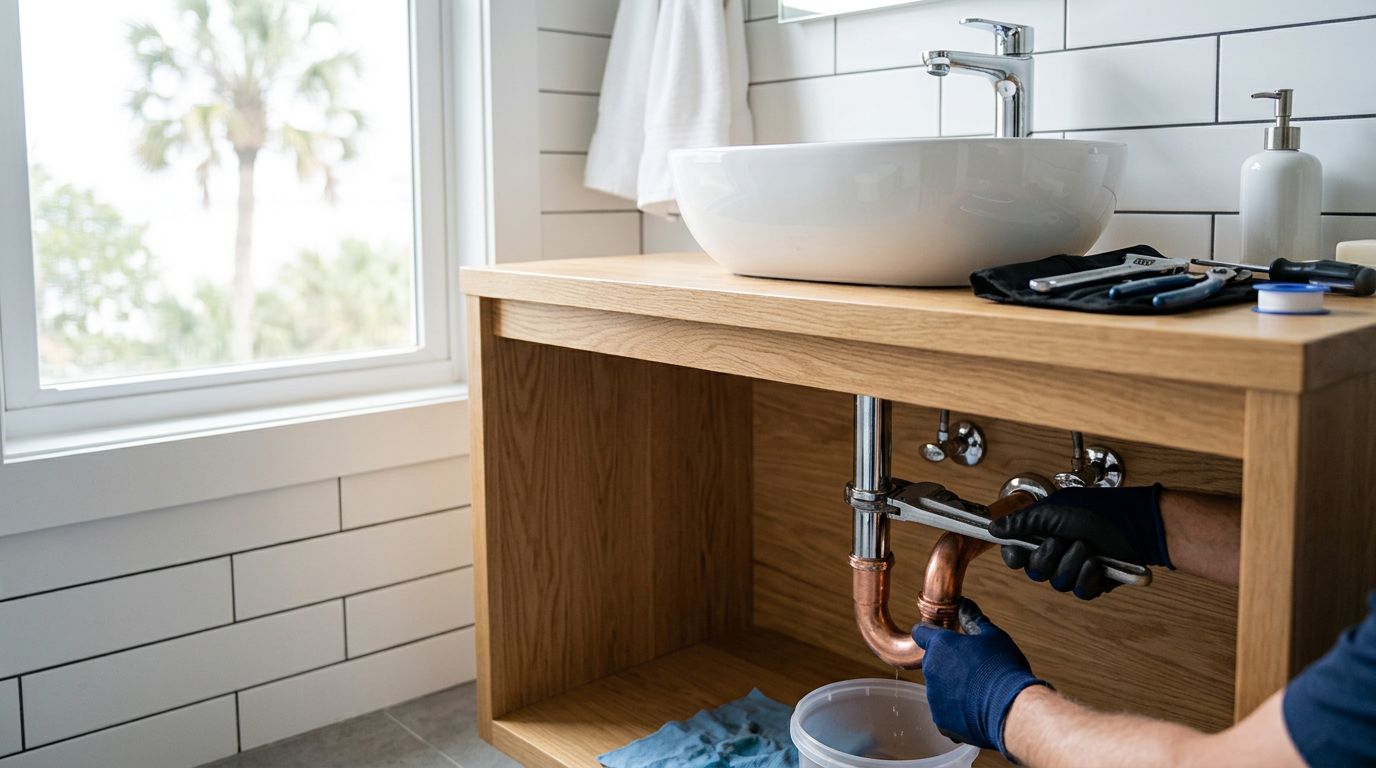
- P-traps : The curved section of pipe under sinks and in showers holds water. That water acts like a plug.
- Vents : Plumbing vents route gases up and out through the roof, and they keep drains flowing smoothly.
In Cape Coral, odors can pop up after a stretch of dry weather, after heavy rain, or after a home has been closed up. Vacation homes are a classic example. If nobody runs water, traps can evaporate. Add warm indoor temps and humidity, and smells linger longer.
If the odor is strong enough to cause headaches, nausea, or burning eyes, open windows, leave the area, and call a licensed plumber. Don't try to "power through" it.
Common causes of sewage odor in Cape Coral homes (and how to spot them)
A sewer smell is usually a local problem, meaning it comes from one bathroom, one drain, or one area. Start by noticing where and when it smells.
Here's a quick way to match symptoms to likely causes:
| What you notice | Where it's strongest | Likely culprit | DIY-friendly? |
|---|---|---|---|
| Smell after you return from travel | Multiple rooms | Dry traps in unused drains | Often, yes |
| Odor near toilet, worse after flushing | Bathroom | Failed wax ring or loose toilet | Sometimes |
| Gurgling drains and slow flow | One or more fixtures | Partial clog, poor venting | Limited |
| Smell during windy days or after storms | Whole house, upper floors | Vent stack issue, blocked vent | Usually, no |
| Odor plus soggy spot outside | Yard near sewer route | Broken sewer line or bad connection | No |
| Smell seems tied to neighborhood events | Near bathrooms, random times | Lift station or sewer main odor entering through dry traps | Yes (trap fix), no (main) |
Cape Coral-specific factors matter here:
- Slab foundations : Many drain lines run under the slab. A cracked or separated pipe can leak odor without obvious water damage.
- High water table : Saturated soil can stress buried piping and can change how gases move.
- City sewer expansions and tie-ins : If your neighborhood is connecting to municipal sewer, changes in flow and pressure can reveal weak points. If you're in or near the city's expansion areas, it may help to review your options for Cape Coral UEP Utility Expansion Project.
- Lift stations : Some areas may notice odors outside at times. If indoor traps are dry, those odors can get pulled inside.
DIY steps to track down a sewage smell (without making it worse)
You don't need special tools to narrow this down. The goal is to restore water seals first, then look for failed seals or venting problems.
1) Refill every trap, even the "forgotten" ones
Run water for 20 to 30 seconds in every sink. Then flush every toilet. Next, run each shower and tub for a minute.
Don't forget these common culprits:
- Guest bath sinks and showers
- Laundry standpipes
- Floor drains (garage, lanai, utility room)
Decision point: If the smell improves within a few hours, dry traps were likely the cause.
2) Check toilets for a broken seal
Walk around each toilet and sniff near the base. Then look for rocking. Even slight movement can break the wax seal.
Also watch for clues:
- Water at the base (even a small ring)
- A smell that spikes right after flushing
Decision point: If the toilet rocks or you see moisture, stop using that toilet and plan a repair.
3) Look for "bio-slime" odors that mimic sewage
Sometimes the smell isn't sewer gas at all. A dirty overflow or buildup in a sink drain can smell like sewage, especially in humidity.
Try this:
- Remove and clean the pop-up stopper.
- Scrub the overflow opening (a bottle brush helps).
- Flush with hot water afterward.
4) Pay attention to timing, not just location
A smell that appears after multiple fixtures run, or after heavy rain, can point to a venting issue or a developing blockage.
Listen for:
- Gurgling sounds
- Bubbling in toilets when a sink drains
- Slow drains in more than one area
Decision point: If two or more fixtures act up, skip chemicals and call a pro. Those symptoms can signal a main line issue.
5) Safety note before you "DIY harder"
Don't climb on a roof to clear a vent unless you're trained and equipped. Also, don't attempt major sewer work or gas-related repairs without a licensed professional.
Repair options and typical cost ranges in Cape Coral
Costs vary by access, pipe material, and whether work is under a slab. Permits can also apply for sewer repairs and new connections.
Here are broad, real-world ranges homeowners often see:
| Repair or service | What it addresses | Typical range (Southwest FL) |
|---|---|---|
| Trap refill and minor drain cleaning | Dry traps, mild buildup | $0 to $50 (DIY supplies) |
| Toilet reset with new wax ring | Odor at toilet base, rocking toilet | $200 to $450 |
| Camera inspection of sewer line | Finds breaks, bellies, root intrusion | $250 to $600 |
| Smoke test for odor leaks | Pinpoints hidden vent or drain leaks | $350 to $900 |
| Main drain cleaning (snaking) | Clearing a main line clog | $200 to $600 |
| Hydro jetting | Heavy buildup, recurring clogs | $400 to $1,200 |
| Spot repair of sewer line | Broken section, exterior access | $1,000 to $4,000+ |
| Under-slab drain repair | Broken pipe beneath slab | $3,000 to $12,000+ |
If you suspect a clog, broken line, or ongoing odor, it's smart to start with a professional evaluation and the right equipment. For ongoing issues, see options for sewer cleaning Cape Coral , especially when odors come with slow drains or repeat backups.
What to gather before calling a plumber (and questions to ask)
A little info up front can save time and money. Before you call, write down:
- Which rooms smell, and when it started
- Whether the home was vacant (and for how long)
- Any recent changes (new toilet, remodel, UEP connection work, storm flooding)
- Whether drains are slow, gurgling, or backing up
- If the smell worsens after rain or heavy water use
- Photos of any visible leaks, staining, or wet spots outdoors
Then ask a few direct questions:
- "Will you start with a camera inspection or smoke test?" (Good for hidden issues.)
- "Do I need a permit for this repair in Cape Coral?"
- "If it's under the slab, what access method do you use?"
- "What's the rough price range before you begin?"
- "How do you confirm the smell is fixed?" (Clear verification matters.)
Conclusion
A cape coral sewage smell indoors usually means your home lost a water seal, a toilet seal failed, or the system can't vent right. Start with simple trap refills and a careful toilet check, then watch for multi-fixture symptoms that suggest a bigger issue. If the odor is strong, persistent, or paired with slow drains, bring in a licensed plumber for testing and repairs. A clean-smelling home isn't luck, it's a plumbing system that's sealed, vented, and working the way it should.


Get a Free Estimate
Got a plumbing issue? We’re here to help! Whether you need emergency repairs, routine maintenance, or have a question about our services, our team is ready to assist you.