Hurricane Season Plumbing Prep Checklist For Cape Coral Homes

Hurricane Season Plumbing Prep Checklist For Cape Coral Homes

When a hurricane is on the way, plumbing is easy to forget until it becomes the problem. A burst outdoor line, a backed-up sewer, or floodwater getting into drains can turn a stressful week into a major cleanup.

This hurricane plumbing prep checklist is built for Cape Coral homes, where slab foundations are common and a lot of plumbing runs through walls, attics, and exterior equipment pads. Use it to find your shutoffs, protect exposed piping, and lower the risk of contamination before the first bands of rain arrive.

Know your shutoffs (and label them before you need them)

In a storm, time feels like it speeds up. You don't want to be hunting for a valve with a flashlight in your mouth. Start by finding the main shutoff inside the home, then find the city meter shutoff outside.

Most Cape Coral homes have a main shutoff valve where the water line enters the house. Common spots include the garage wall, a utility room, or near the water heater. If you can't find it quickly, have a plumber point it out and replace any stuck valves now, not the day before landfall.

Next, locate the water meter box, usually near the curb. Inside is a shutoff valve that stops water from the street. A meter key helps, but don't force anything. If the valve won't move, leave it alone and call for help when it's safe.

When should you shut water off at the meter? Do it if you're evacuating, if you expect flooding to reach the house, or if you've had past storm damage. Shutting off water can reduce damage if a supply line breaks inside a wall while you're gone. However, if firefighters or neighbors may need access to a hose bib for safety, consider your situation first.

Use this quick pre-storm shutoff checklist:

  • Find the home's main water shutoff valve and test it (turn off, then back on)
  • Label the shutoff with a tag, tape, or permanent marker (keep it readable)
  • Locate the water meter shutoff at the curb and clear debris from the box lid
  • Learn how to shut off the water heater (electric breaker off first, then cold supply valve)
  • If you have irrigation, locate the irrigation shutoff valve and backflow device

Safety note: If floodwater reaches outlets or the water heater area, treat the space as energized. Don't step in water to flip breakers or unplug equipment.

If you want a broader maintenance routine that also helps with storm season, this storm-ready plumbing maintenance checklist is a useful reference for what to inspect and when.

Protect exposed plumbing outdoors (hose bibs, pool equipment, and outdoor kitchens)

Outdoor plumbing takes the first hit from wind, flying debris, and pooling water. Even if your home sits on a slab, you may have exposed PVC, hose connections, and equipment pads that don't like impact or flooding.

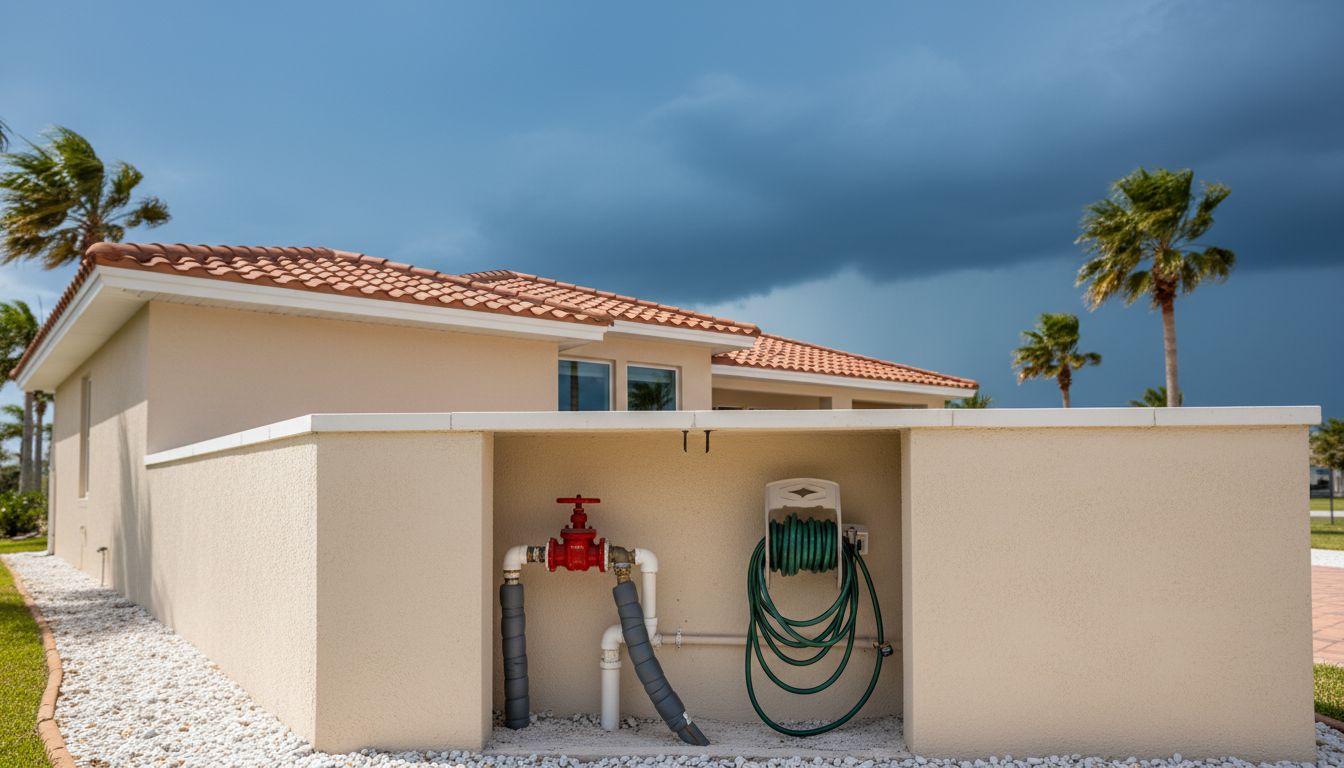
Start with hose bibs (outdoor spigots). Remove hoses, because a whip-cracking hose in high wind can damage the faucet or wall. If your home has a shutoff valve for exterior hose lines, close it and drain pressure by opening the hose bib briefly. Don't forget outdoor showers and utility sinks.

Pool equipment needs attention too. Pumps, filters, heaters, and chlorinators often sit on a pad with rigid plumbing. Clear the area, strap loose items, and consider raising small accessories that could float. If your pool auto-fill ties into the home's water supply, know how to isolate it.

Outdoor kitchens are another common weak spot. Many have a sink, ice maker, or fridge supply line. Those small lines can leak a lot if they snap. Shut off the supply to that area if you can, and disconnect quick-connect hoses where possible.

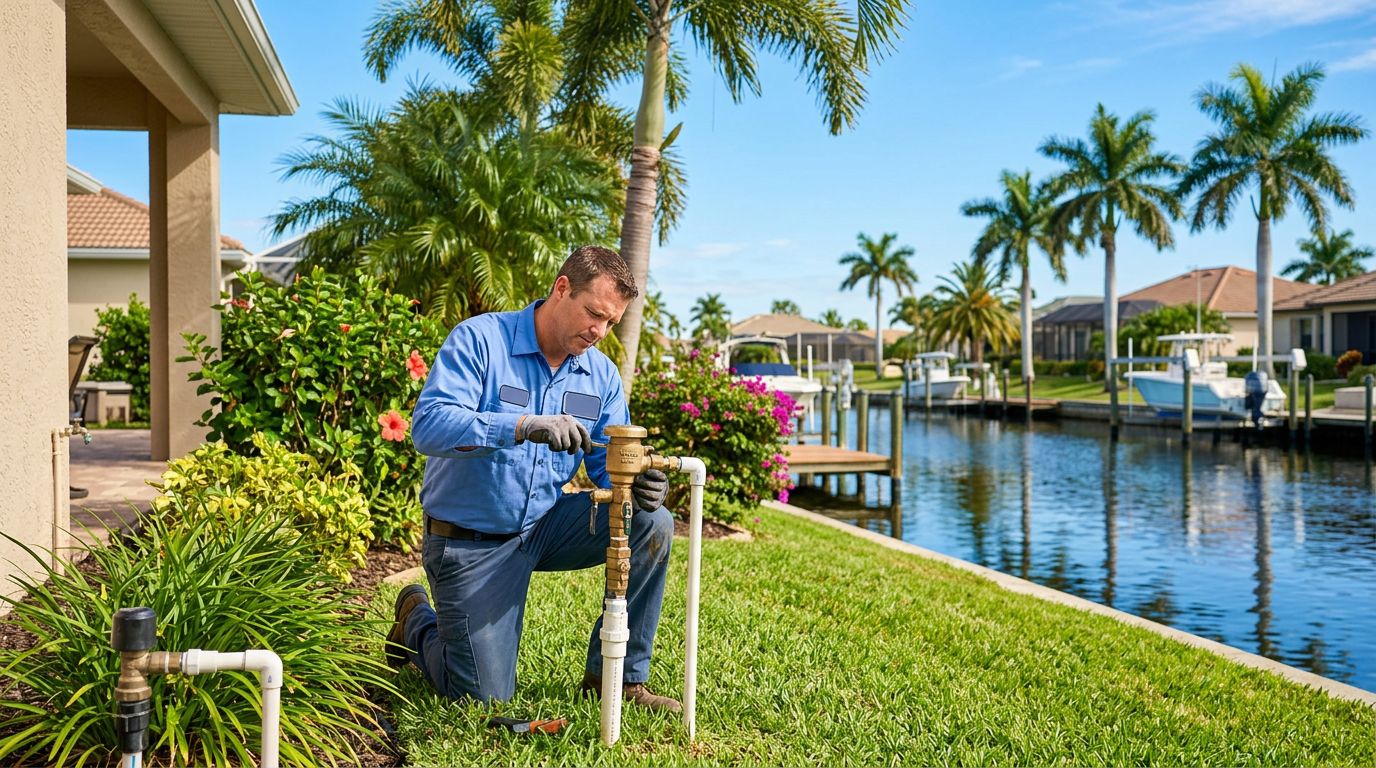
Finally, check irrigation. Many Cape Coral properties have irrigation backflow devices above ground. Keep them protected from impact, and make sure the assembly is supported, not wobbling on a tired bracket.

Use this exterior protection checklist:

  • Remove all garden hoses, splitters, and timers from hose bibs
  • Shut off and depressurize exterior hose lines (if you have an interior shutoff)
  • Secure pool equipment area, remove loose items, and protect exposed PVC
  • Shut off water to outdoor kitchen fixtures (or close local stop valves)
  • Inspect irrigation backflow and piping supports, tighten straps if loose

A garage often becomes the "storm storage room," which can create a plumbing problem. Keep chemicals, paint, and fertilizers up on shelves, because floodwater can spread them. Also move anything heavy away from exposed pipes, water heaters, or softeners, since a shifting object can crack fittings.

Prevent contamination and backflow (and know what to do if sewage backs up)

Cape Coral storms bring two big plumbing risks at once: heavy rain that overloads drainage, and standing water that can carry bacteria. The goal is simple: keep dirty water out of your home's clean water system, and keep sewage where it belongs.

Backflow is the big concern. If pressure drops in the city system during a major event, contaminated water can be pulled backward. Homes may have backflow prevention on irrigation, and some properties have additional devices depending on plumbing layout. If you're not sure what you have, schedule an inspection well ahead of hurricane season.

Also take a look at your sewer cleanout (usually a capped pipe outside). Make sure the cap is intact and snug. A missing or cracked cleanout cap can let contaminated water enter the sewer line near your home, then push odors or sewage back toward fixtures when the system is stressed.

If sewage backs up inside the home, treat it as a health hazard. Stop all water use right away. Running a shower or flushing can make the mess worse.

  • Confirm sewer cleanout cap is present and unbroken
  • Keep a test plug or temporary cap on hand (correct size for your cleanout)
  • If you smell sewage or see backup, stop using all fixtures immediately
  • Keep kids and pets away from affected areas, close doors, ventilate if safe
  • Call a plumber for assessment and clearing once conditions allow

If flooding happens, take a cautious approach during cleanup. Electricity and water are a dangerous mix, and wet drywall hides problems.

Here are realistic first steps after floodwater or a suspected sewer backup:

  • Don't use sinks, toilets, tubs, or washers until you know drains are clear and safe
  • If water reached outlets or appliances, don't restore power until inspected
  • Photograph damage and keep notes for insurance (what, where, and when)
  • Clean hard surfaces with soap and water first, then disinfect at a high level
  • Follow local advisories for drinking water (boil-water notices can happen)

If the home has gas (natural gas or propane) and you smell gas, leave immediately and contact the utility or supplier. Only shut off gas if you know how and it's safe to reach.

In some neighborhoods, homes are still on septic or are transitioning to city sewer connections. If you're on septic, avoid heavy water use after storms, because saturated ground can slow drainage and raise backup risk.

Wrap-up: a calmer storm starts with a dry valve and a clear plan

Hurricanes test every part of a home, and plumbing is no exception. A little hurricane plumbing prep now can prevent a soaked garage, contaminated drains, or a surprise leak you can't reach in time.

Pick one hour, find and label your shutoffs, then protect the outdoor lines and equipment. If anything feels stuck, corroded, or uncertain, get it checked before the next warning cone points at Cape Coral.

By Infinity Plumbing February 25, 2026
If you run a restaurant in Cape Coral, your grease trap is like a bouncer at the door. It keeps fats, oils, and grease (FOG) from getting into the sewer, where they can cause backups, odors, and expensive downtime. The bottom line: grease trap cleaning Cape Coral costs depend...
By Infinity Plumbing February 24, 2026
Thinking about going tankless because you're tired of running out of hot water, or watching your utility bill creep up? In Cape Coral, a tankless unit can feel like switching from a pantry to a made-to-order kitchen, hot water when you want it, without a big tank staying warm...
By Infinity Plumbing February 23, 2026
Water moves fast when a pipe lets go. In a Cape Coral home, minutes can mean soaked drywall, ruined floors, and a water heater that runs dry and overheats. A simple Cape Coral water shutoff plan puts you back in control. You'll know which valve to turn, which breaker to flip,...
By Infinity Plumbing February 22, 2026
If your shower feels like a pressure washer, it's not just annoying, it can get expensive fast. A pressure-reducing valve (PRV) protects your plumbing from incoming water pressure that's too high. In Cape Coral, most homeowners budgeting for PRV replacement Cape Coral costs in...

Get a Free Estimate

Got a plumbing issue? We’re here to help! Whether you need emergency repairs, routine maintenance, or have a question about our services, our team is ready to assist you.

GET PROFESSIONAL HELP