Why Your Cape Coral Water Pressure Is Low, Top Causes, Quick Checks, and When to Call a Plumber

Why Your Cape Coral Water Pressure Is Low, Top Causes, Quick Checks, and When to Call a Plumber

Nothing tests your patience like stepping into the shower and getting a weak trickle. Cape Coral low water pressure can feel random, but it usually follows a pattern once you know what to look for.

This guide walks you through quick checks you can do in about 10 minutes, how to measure pressure the right way, and the most common local causes, including hard water scale, aging pipes, and pressure regulator issues. If it turns out to be more than a simple fix, you’ll also know exactly when it’s time to bring in a pro.

First, pinpoint the problem: one fixture, one area, or the whole house?

Low pressure at one faucet is a very different problem than low pressure everywhere. Start by testing a few spots: kitchen faucet (cold and hot), a bathroom sink, and an outdoor hose bibb. If one fixture is weak but the others are fine, the issue is usually right at that fixture (clogged aerator, partly closed stop valve, or a worn cartridge).

If the whole house is weak, think bigger:

  • Ask a neighbor (or two) if their pressure dropped too. If nearby homes have the same issue, it points to a city-side problem, a local main repair, or a temporary pressure change.
  • Check for current utility alerts. In early February 2026, Cape Coral reported a citywide reuse irrigation shutdown tied to a main break, which can mean low or no pressure for lawn watering on affected schedules. Drinking water pressure alerts are separate, so it’s still worth checking city updates if your indoor pressure changes suddenly.
  • Notice timing. Pressure that’s fine mid-day but weak in the early morning can be normal “high-demand” timing, especially when many sprinklers are running.

One more clue: if only hot water is low, your water heater or the hot-side piping may be restricted. If hot and cold are both low, the restriction is usually before the water heater (filters, PRV, main valve, clogged piping, or a leak).

The 10-minute checklist (quick checks that often solve it)

You don’t need special tools for most of this. If you can spare a few minutes, these checks can save a service call, or at least help you describe the issue clearly.

  1. Check the easiest stuff first. Make sure the faucet handle opens fully, then try a different fixture to compare.
  2. Look for a partially closed shutoff valve. Under-sink angle stops can get bumped during cleaning or cabinet work.
  3. Clean the aerator. Unscrew the tip of the faucet, rinse debris, and re-install. For showerheads, remove and rinse the screen if accessible.
  4. Confirm your main shutoff is fully open. Many homes have a valve at the meter and another where the line enters the home. Don’t force a stuck valve.
  5. Check any whole-home filter or softener. A clogged filter cartridge can choke flow. If your system has a bypass, temporarily bypass it to compare pressure.
  6. Test a hose bibb, not a sink faucet. Hose bibbs usually give the most direct read of house pressure.
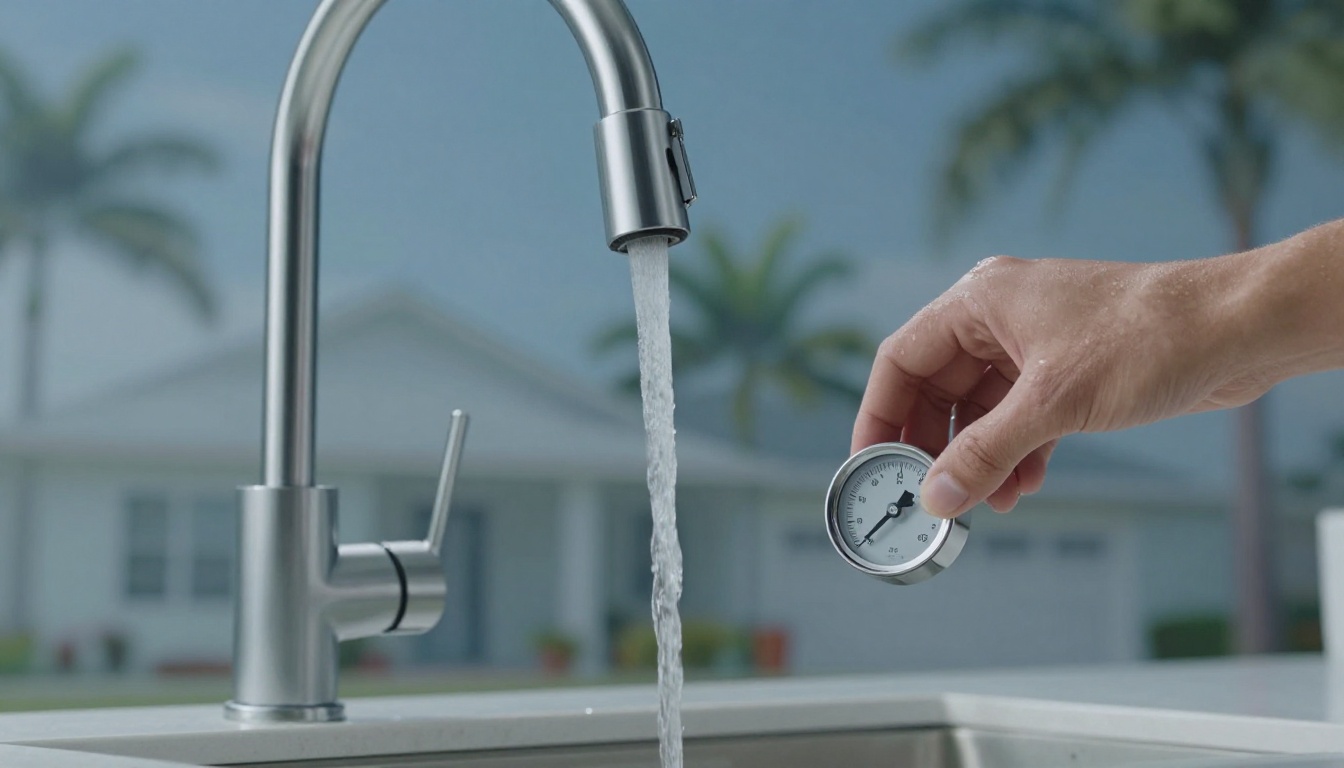
  7. Use a hose-bibb pressure gauge. Screw it onto an outdoor spigot, close all fixtures, then read the gauge. This is static pressure .
  8. Check flowing pressure too. Keep the gauge on, then open a nearby faucet or tub. The gauge will drop. That reading is your flowing pressure .
  9. Interpret what you see. Many homes feel best around 40 to 60 psi. If static pressure is decent but flowing pressure collapses, you likely have a restriction or undersized piping.
  10. Listen and look. PRVs can buzz, pipes can rattle, and soft ground spots outside can hint at a leak. Also check your water meter, if it’s spinning with everything off, water is moving somewhere.

If you want a pro to take it from here, start with Cape Coral plumbing services so the right tech and tools show up for pressure diagnostics.

Why Cape Coral water pressure is low: the most common causes (and what they look like)

When the quick checks don’t fix it, the cause is usually one of these.

Mineral scale from hard water. Florida water often carries dissolved minerals from limestone sources. Over time, scale can narrow pipe interiors and clog fixture screens. This tends to show up as a slow decline in pressure, not a sudden drop.

A failing or mis-set pressure-reducing valve (PRV). Many homes have a PRV to keep pressure at a safe level. When it wears out, it can cause low pressure, pressure swings, or even a faint buzzing. If you adjust a PRV, do it carefully and in small steps. Don’t exceed about 80 psi , and if you’re not sure what you’re doing, stop and call a plumber. Too much pressure can damage appliances, valves, and water heaters.

Old galvanized piping. Some older Cape Coral homes still have galvanized steel lines. Inside, they corrode and narrow like an artery with plaque. You might notice rusty water, frequent clogs at aerators, and pressure that keeps getting worse. In many cases, the real fix is replacing those lines. If you’re weighing that option, this guide to repiping cost estimate in Cape Coral can help you plan.

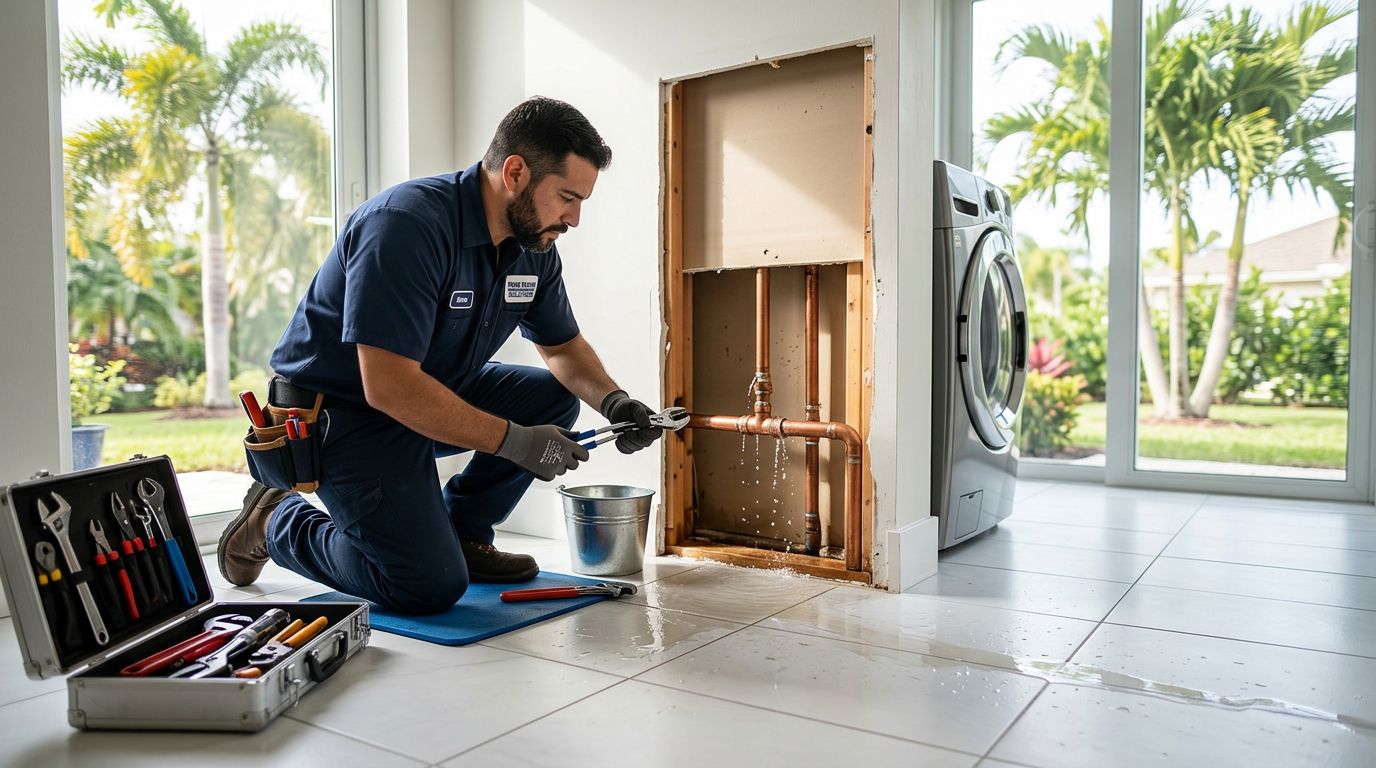
Hidden leaks. A slab leak or underground service-line leak can steal pressure and raise your water bill. Sometimes there’s no obvious puddle. A meter that moves when all water is off is a big warning sign.

City-side supply issues or nearby repairs. Main breaks, hydrant use, or utility work can lower pressure temporarily. If neighbors also have low pressure, this becomes more likely.

Water heater or hot-side restriction. If only hot water is weak, sediment buildup in the heater, a clogged dip tube (in some models), or a hot-side shutoff that’s not fully open can limit flow.

Call a plumber now if…

  • Pressure drops suddenly and severely across the house
  • You see signs of a leak (meter spinning with water off, wet spots, hissing, or unexplained higher bills)
  • Water is discolored or full of grit after repeated flushing
  • The PRV is buzzing, leaking, or you can’t get stable pressure
  • A well pump is short-cycling (rapid on and off) or you have no water
  • You’re tempted to crank the PRV up “until it feels right”

Local codes and conditions vary, and persistent low pressure can point to leaks or failing components, so treat recurring issues as a real repair need, not just an annoyance.

Conclusion

Low pressure usually has a simple story behind it: a clogged screen, a closed valve, a tired PRV, scale buildup, or a leak that’s quietly pulling water away. The fastest path is to measure pressure at a hose bibb, compare static vs flowing readings, and confirm whether neighbors are affected. If the drop is sudden, severe, or paired with leak signs, bring in a pro quickly to protect your home and your plumbing system. Getting your water pressure back to normal should feel straightforward, not like guesswork.

By Infinity Plumbing February 3, 2026
If you’ve ever filled a pool, run lawn sprinklers, or owned a small business in Cape Coral, you’ve used water in ways that can put the public supply at risk. That’s why backflow prevention keeps coming up in permits, inspection notes, and sometimes even warning letters. Backfl...
By Infinity Plumbing September 8, 2025
How Much Does a Whole Home Water Filtration System Cost in Cape Coral?
By Infinity Plumbing September 5, 2025
Troubleshooting Common Lawn Irrigation Problems in Cape Coral
By Infinity Plumbing September 2, 2025
How Much Does a New Lawn Irrigation System Cost in Cape Coral?

Get a Free Estimate

Got a plumbing issue? We’re here to help! Whether you need emergency repairs, routine maintenance, or have a question about our services, our team is ready to assist you.

GET PROFESSIONAL HELP