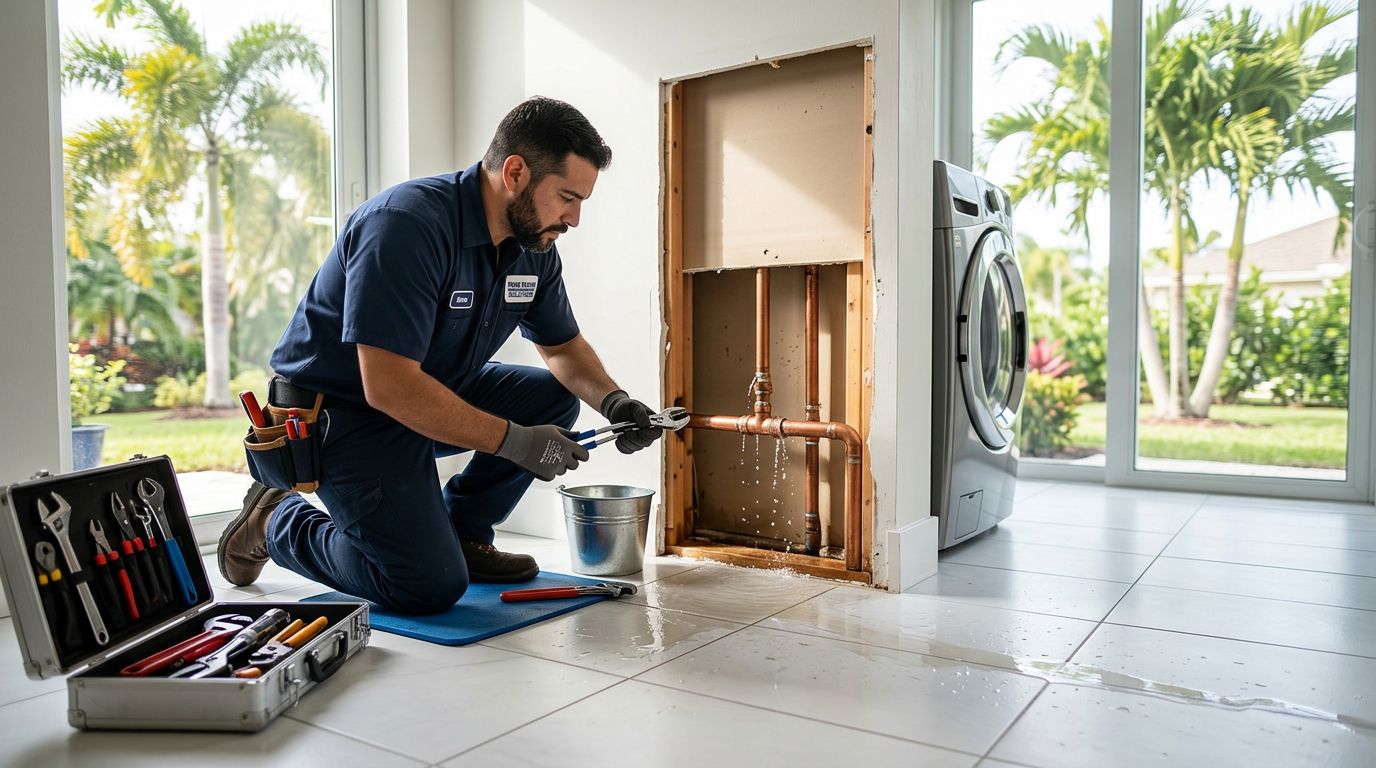
AC Condensate Drain Line Clogged in Cape Coral, Signs, Quick Fixes, and When to Call a Plumber

AC Condensate Drain Line Clogged in Cape Coral, Signs, Quick Fixes, and When to Call a Plumber

If your AC is running but you're finding puddles, ceiling stains, or a musty smell, don't ignore it. In Cape Coral, a clogged condensate drain line is a common cause of "mystery water" in homes, especially during the humid months and rainy season.

The good news is some clogs are simple. The bad news is that a small drip can turn into soaked drywall fast, particularly when the air handler sits in the attic. Below you'll learn what causes these clogs locally, how to spot them early, a few safe quick fixes, and when it's time to call a plumber.

Why AC condensate drain lines clog so often in Cape Coral

Your AC doesn't just cool air, it also pulls moisture from it. That moisture (condensate) drips into a drain pan and exits through a small PVC drain line. Think of it like your AC "sweating" into a straw. When that straw gets slimy or pinched, water backs up.

Cape Coral makes clogs more likely for a few reasons:

High humidity means more water moving through the line every day. During rainy season, the system can produce a lot of condensate, which feeds buildup.

Warm temperatures encourage algae and biofilm. Over time, a dark, wet pipe becomes a perfect place for slime to grow, especially if the line stays damp between cycles.

Many homes have attic air handlers. When the drain pan overflows up there, you might not notice until a wet spot spreads on the ceiling.

Outdoor drain terminations get exposed. The end of the line can clog with mulch, insect nests, or grass clippings. Even a small blockage can slow the flow and start a backup.

Some setups drain into plumbing. If the condensate ties into a house drain and that drain is sluggish, the AC line can back up too. In those cases, a plumber may be the right call.

In short, Cape Coral's moisture and heat create the perfect recipe for a clogged line. Catching it early saves money and cleanup.

Signs of a clogged condensate drain line (and what they usually mean)

A clog doesn't always look dramatic at first. Often, it starts with small hints that grow over a few days.

Watch for these common signs:

Water around the indoor unit. If you see water near the air handler or in a closet, the drain pan may be filling faster than it can empty.

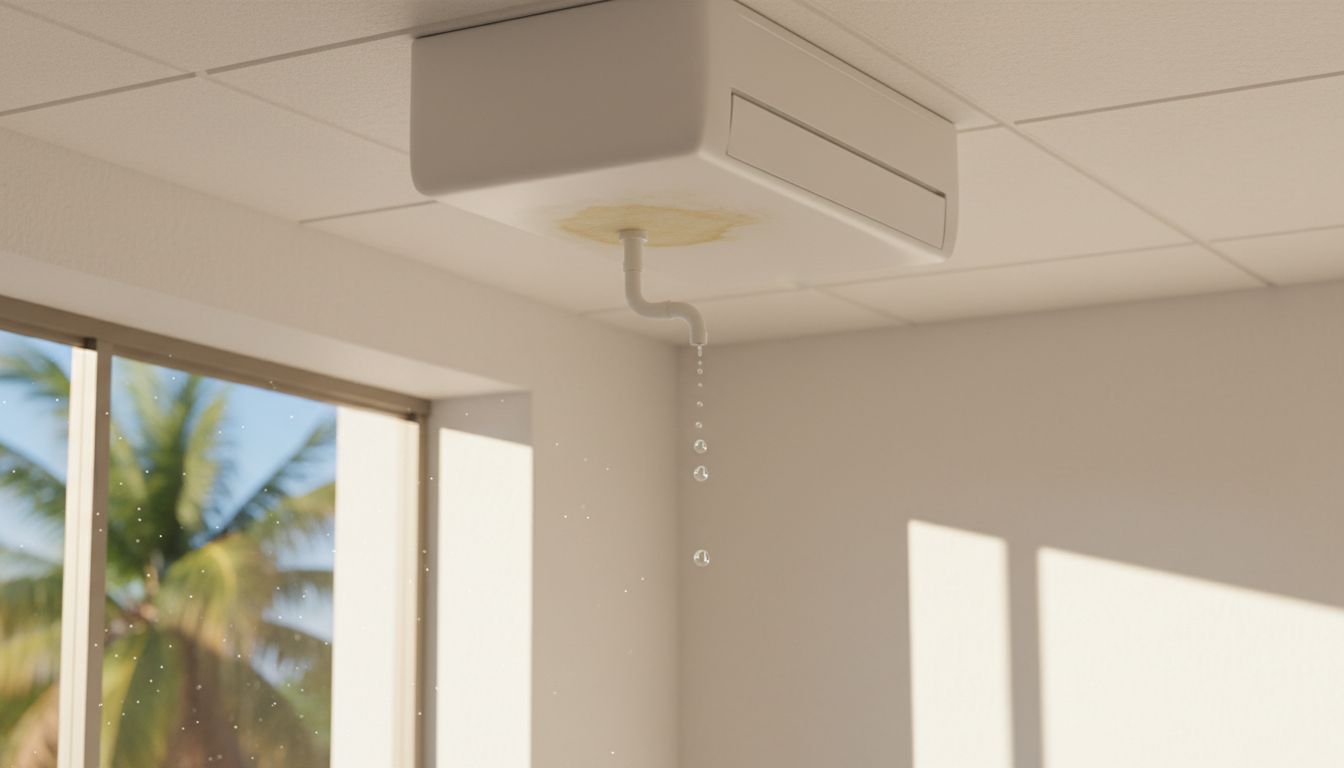
Dripping from a ceiling vent or ceiling stain. In homes with attic air handlers, this is a big red flag. Water may be overflowing the secondary pan, or missing it entirely.

AC shuts off on its own. Many systems have a float switch that cuts power when water rises in the pan. It's annoying, but it can prevent major damage.

Musty or sour odor when the AC starts. Standing water can smell. So can damp insulation and dust when moisture lingers.

Higher indoor humidity. If the system can't drain well, it may short cycle or struggle, leaving the house feeling sticky.

One quick "gotcha": if you clear the clog but the unit still shuts off, the float switch might be stuck, or the pan could be cracked or misaligned.

Fast checks you can do in 2 minutes

Turn the thermostat off, then look near the indoor unit with a flashlight. If you see standing water in the emergency pan, don't keep running the system. Next, check the outside drain line outlet (usually a small PVC pipe near the outdoor unit or near an exterior wall). If it's not dripping on a humid day, it may be blocked.

Quick troubleshooting and safe quick fixes (plus when to call a plumber)

Start with a simple goal: stop the water, then restore drainage. Don't push the system to run if water is pooling.

Quick Troubleshooting (symptom → likely cause → next step)

Use this table to choose your next move.

Symptom Likely cause Next step
Water on floor near air handler Primary drain line clogged Turn AC off, try wet/dry vac at drain outlet
Ceiling stain or drip Overflow from attic pan or clogged secondary drain Turn AC off, protect area, call a pro to prevent damage
AC keeps shutting off Float switch triggered by high water Clear clog, then reset/check float switch
Musty smell at startup Standing water, algae, damp insulation Clear line, dry area, watch for recurring odor
Outside drain line not dripping on humid day Blockage or kinked line Check outlet for debris, then vacuum line

The takeaway: if you see ceiling symptoms, treat it as urgent. Gravity and drywall don't mix well.

Safe quick fixes homeowners can try

Before any hands-on work, turn off the AC at the thermostat. If you'll open an access panel, also switch off power at the air handler breaker. Water near wiring is not a DIY moment.

Here are a few low-risk steps:

  1. Vacuum the drain line from outside
    • Find the condensate drain outlet outside.
    • Put a wet/dry vac hose over the pipe end and seal with a rag.
    • Run the vacuum for 1 to 2 minutes.
    • Check the vac canister for dirty water or slime.
  2. Flush with distilled vinegar (after the clog clears)
    • Locate the drain line access tee near the air handler (if you have one).
    • Pour about 1 cup of distilled vinegar into the line.
    • Wait 20 to 30 minutes, then flush gently with water.
    • Avoid mixing cleaners. Don't combine vinegar with bleach.
  3. Clear the drain outlet area
    • Remove mulch, leaves, or grass blocking the pipe end.
    • Make sure the pipe slopes downward and isn't crushed.

If odors or moisture keep coming back, moisture control matters. This guide on protecting HVAC systems from mold offers homeowner-friendly prevention tips.

Call a Pro Now (urgent situations)

Stop and call for help right away if you notice: water near electrical parts, a sagging ceiling, suspected mold, or repeated AC shutdowns after you've tried basic clearing.

For health and cleanup guidance when moisture has lingered, see the CDC mold cleanup guide for homeowners and the EPA's section on mold prevention and moisture control.

When to call a plumber in Cape Coral (and what it may cost)

If your clogged condensate drain line returns quickly, a deeper issue is likely. In many Cape Coral homes, the drain line runs through tight attic spaces or connects into a household drain. That's where a plumber can make a big difference.

Call a plumber when:

  • The line clogs again within days or weeks.
  • You can't access the attic unit safely.
  • The condensate ties into a slow or backing-up drain.
  • Water damage has started (baseboards, drywall, insulation).
  • You want a permanent fix, like adding a cleanout or correcting drain slope.

Service prices vary by access and severity, but typical ranges often look like this:

  • Basic drain line clearing: about $125 to $350
  • Attic access, drain pan or safety switch issues: about $250 to $600
  • Line reroute, condensate pump replacement, or repairs after damage: about $400 to $900+

If the clog is related to a bigger drain issue, professional drain cleaning may be needed. In that case, it helps to look at Cape Coral sewer cleaning services to understand options like inspections and clearing methods.

Conclusion

A clogged condensate drain line can look minor, but Cape Coral's humidity can turn it into water damage quickly. Start by shutting the system off, checking for overflow, and trying a careful vacuum and flush. If you see ceiling stains, smell ongoing mustiness, or deal with repeat shutdowns, bring in a pro. Fixing the source early is the simplest way to protect your home from water and mold .

By Infinity Plumbing February 14, 2026
A sewer problem can feel like trying to find a leak in a wall with your eyes closed. You might notice slow drains, gurgling, or a bad smell, but you still don't know where the problem lives. A sewer camera inspection cost is usually worth it because it turns guessing into seei...
By Infinity Plumbing February 13, 2026
If you’re on a well and septic in Cape Coral, the Utility Expansion Project can feel like someone handed you a to do list written in plumbing code. The good news is the process is predictable once you know who does what. This guide breaks down Cape Coral UEP hookups in plain l...
By Infinity Plumbing February 12, 2026
A shower that won’t hold temperature can feel like a car with a slipping transmission. It still runs, but you don’t trust it. In Cape Coral, the shower valve replacement cost depends on one big question: can a plumber fix it by swapping the cartridge, or do you need the full v...
By Infinity Plumbing February 11, 2026
If your shower feels like a pressure washer, you’re not imagining it. Water pressure Cape Coral homeowners get from municipal lines (or from a well and pump setup) can run higher than what your plumbing fixtures were built to handle. High pressure can feel great for a week, th...

Get a Free Estimate

Got a plumbing issue? We’re here to help! Whether you need emergency repairs, routine maintenance, or have a question about our services, our team is ready to assist you.

GET PROFESSIONAL HELP