Cape Coral Sewer Lift Station Alarm Going Off, What It Means, Safe Reset Steps, and When to Call for Service

A Cape Coral lift station alarm can feel like a smoke alarm for your plumbing. It's loud for a reason, it's warning you that wastewater may not be moving like it should.
The good news is you can take a few safe steps right away to lower the risk of a backup, without touching wiring or opening any control boxes. Then you can call the right people with the right details, which speeds up the fix.
Quick Actions (Do This First)
- Stop heavy water use right now (no laundry, long showers, dishwashers).
- Look for overflow near the tank lid, wet ground, or sewage odor outside.
- Check for a power outage in the home (lights, outlets, tripped breaker).
- Document the alarm (time, lights, buzzer, weather, any water on ground).
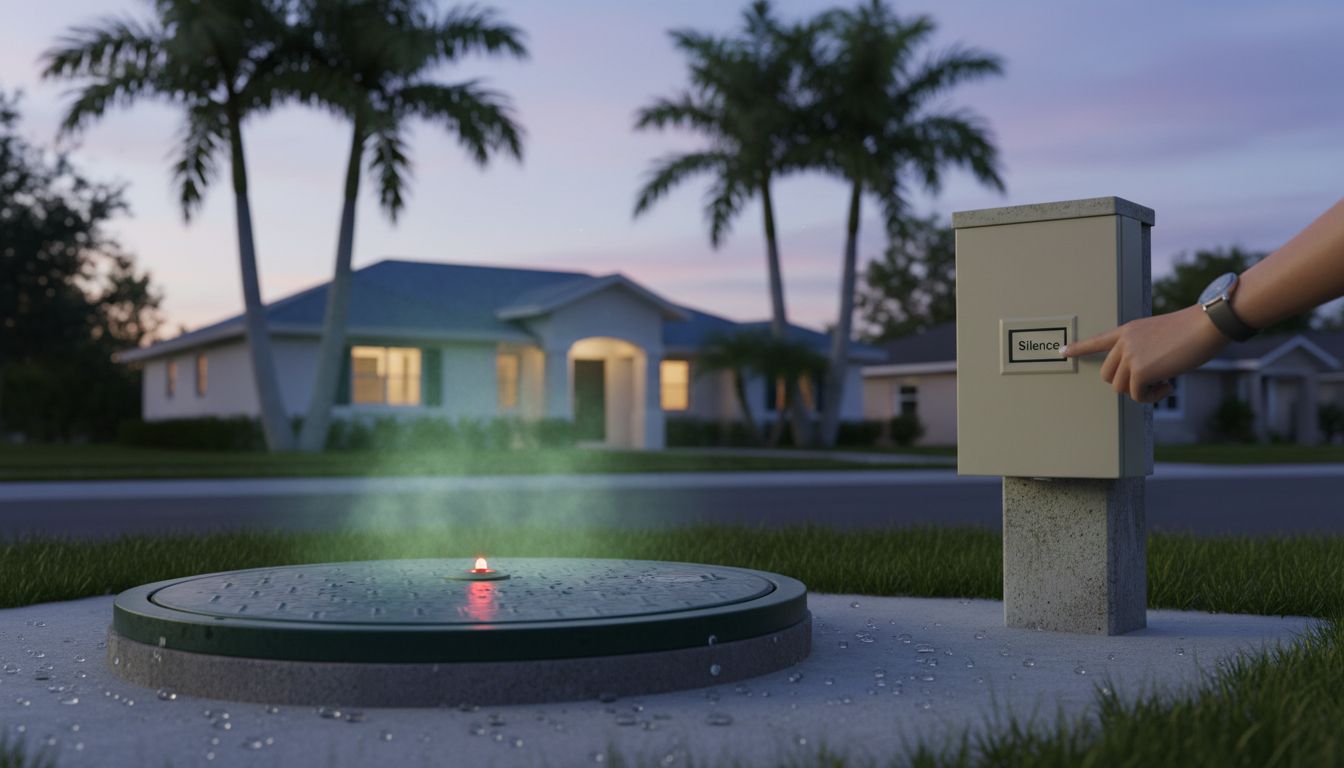
- If it's safe, press the exterior "Silence" button (only if clearly labeled).
- Call the right contact (City, HOA, or plumber) based on who owns the station.
When to Call Immediately (No Waiting)
- Sewage is backing up in a toilet, tub, shower, or floor drain
- You see overflow at the tank or wet, smelly pooling outside
- The alarm returns within minutes after silencing
- You hear grinding, screeching, or repeated clicking from the pump area
- Anyone has had contact with sewage , especially kids or pets
What a sewer lift station alarm usually means in Cape Coral
A sewer lift station (sometimes a residential lift station or grinder pump setup) moves wastewater uphill or to a main line. When the system can't keep up, a float switch or sensor triggers an alarm. Think of it like your tank saying, "I'm getting too full."
In most cases, the alarm points to one of these issues:
- High water level in the tank because the pump is not moving wastewater out fast enough.
- Power problem such as a tripped breaker, blown fuse, GFCI trip, or outage.
- Pump or float issue such as a stuck float, jammed impeller, or worn pump.
- Downstream blockage in a line that prevents flow, even if the pump runs.
Ownership matters in Cape Coral. Some lift stations are part of the public wastewater system. Others belong to an HOA, condo association, or a private property owner. If the station is on your lot and serves only your home, it's often homeowner-maintained. If it serves several homes, it may be HOA-managed. If it's on a city easement or tied to the municipal system, it may be City-managed.
For suspected City-managed wastewater issues, start with official contacts from the City of Cape Coral :
- (239) 574-0851 (water and sewer line breaks, weekdays 7am to 3pm)
- (239) 242-3400 (after-hours emergencies)
- For non-emergency routing, you can also try 311 at (239) 574-0425
If you're unsure who owns it, check your utility bill, neighborhood documents, or ask your HOA manager.
Safe checks you can do without opening panels or touching wiring
Your goal is to prevent a mess and gather clues. Skip anything that involves removing covers, opening electrical boxes, or handling wiring.
Start outside, then move inside:
- Reduce water use fast. Every flush and faucet adds to the tank. Use toilets only if needed.
- Check the area around the tank. Look for wet soil, sewage odor, or liquid near lids and vents.
- Listen from a safe distance. A working pump may hum steadily. Repeated clicking can mean a float issue.
- Check your home's power basics. If the whole house flickered, a power event may have triggered the alarm.
- Check the breaker label. If a breaker is clearly labeled for the lift station and it's tripped, don't keep flipping it. Reset it once only. If it trips again, stop and call.
- Write down what you see. Time, alarm light color, buzzer, recent storms, recent heavy water use, and whether any drains were slow earlier.
This quick table helps you decide what to do next:
| What you notice | What it can mean | Safest next step |
|---|---|---|
| Red light, buzzer, no overflow | High level warning | Reduce water use, silence alarm, call for service |
| Alarm after a storm or flicker | Power interruption | Check breakers once, then call if alarm stays on |
| Wet, smelly pooling near lid | Overflow or leak | Keep people away, call immediately |
| Toilets gurgle or back up | Line or pump problem | Stop water use, call immediately |
A lift station alarm is a warning, not a DIY project. If anything looks like sewage, treat it as unsafe.
Safe reset steps (and what "reset" should really mean)
Most homeowners should not "reset" a lift station in the way a technician would. What you can often do safely is silence the buzzer so you can think and make calls.
Only do these steps if the button is outside, clearly labeled, and easy to reach without tools.
- Stop water use first. Don't silence an alarm while you keep running water.
- Look for overflow. If you see sewage or suspect it, don't touch anything else. Call right away.
- Press "Silence" once. Many systems allow a temporary silence while the light stays on.
- Wait 5 to 10 minutes. Listen for the pump to run (a steady hum can be normal).
- Do not open the control panel. No screws, no lids, no wiring.
- If the alarm returns quickly, stop. That's your sign the problem is still active.
After you silence the alarm, keep water use low until the issue is confirmed fixed. Avoid these common mistakes:
- Don't run laundry "just one load."
- Don't keep flushing to test it.
- Don't pour cleaners or drain chemicals into the system.
- Don't repeatedly reset breakers. One reset is the limit.
A good rule: if you can't fix it with your eyes, your ears, and one labeled button, it's time to call.
When to call for service, city vs HOA vs private, plus sewage safety
Call for service any time the alarm stays on, returns, or you notice slow drains. The fastest fixes often come from the best information, so document first:
- Exact address and nearest cross street
- Time the alarm started
- Whether the light is red and whether the buzzer is sounding
- Any overflow , wet ground, or odor
- Recent events (power outage, heavy rain, lots of guests)
Who should you call?
- City-managed area: Use (239) 574-0851 (weekdays 7am to 3pm) or (239) 242-3400 (after-hours emergencies). Start with the City if the station appears public or on an easement.
- HOA-managed station: Call your HOA or property manager first. They may have a contracted vendor and required process.
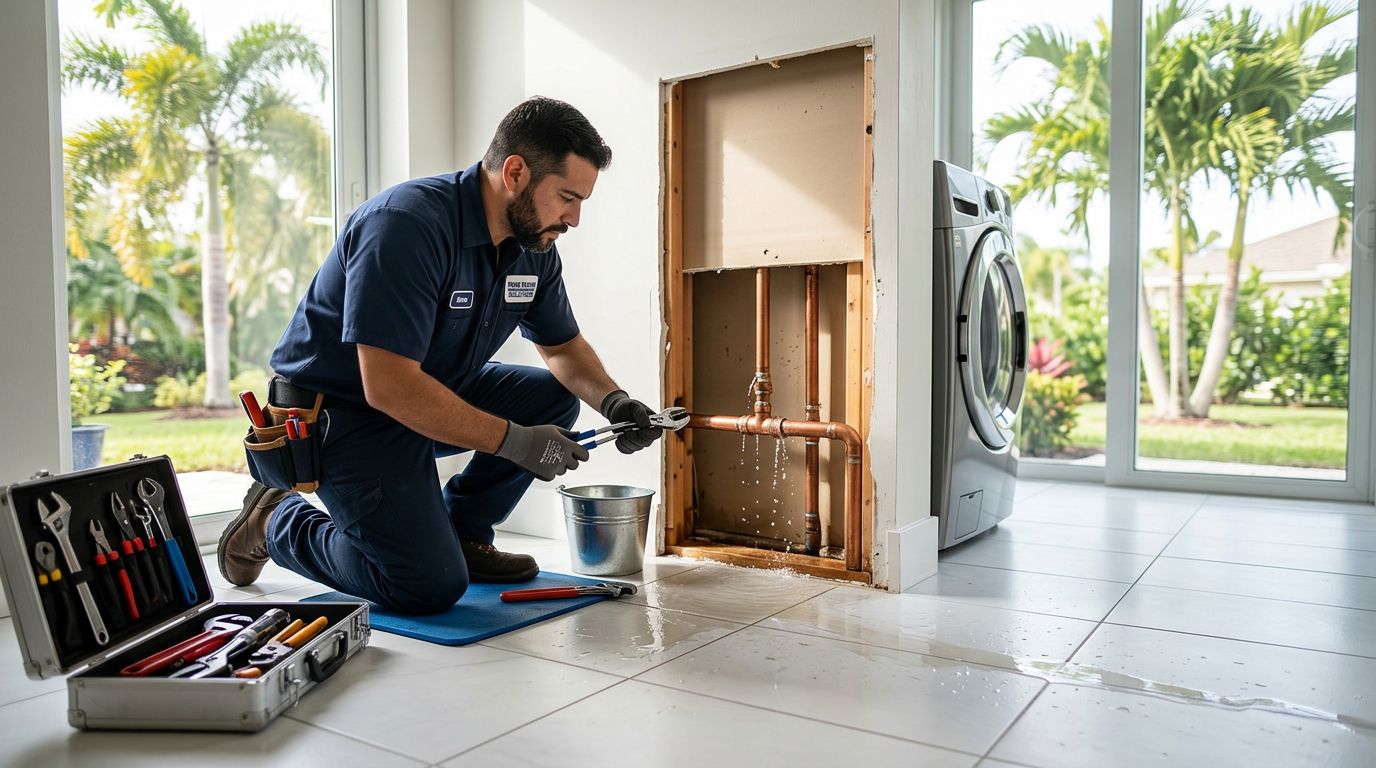
- Private residential station or plumbing issue inside the home: Call a licensed plumber. If you're also seeing backups or suspect a clogged sewer line, professional drain help matters. Infinity Plumbing's Cape Coral sewer repair services are a good fit when drains, lines, or wastewater flow are part of the problem.
Sewage exposure and cleanup basics (keep it simple and safe)
Sewage can carry germs. Keep kids and pets away, and don't track it through the house.
For small, contained spots you can clean safely:
- Wear gloves and closed-toe shoes, add eye protection if splashing is possible.
- Ventilate the area, then clean with soap and water first.
- Disinfect hard surfaces with a bleach solution mixed carefully (never mix bleach with ammonia).
- Bag contaminated towels or absorbent materials and wash hands well.
For larger spills, soaked carpet, or any overflow that keeps spreading, call professionals. You can also review public health information through the Florida Department of Health and local resources from Lee County Government. If a spill reaches storm drains or a waterway, reporting guidance is available through the Florida Department of Environmental Protection.
Conclusion
A Cape Coral lift station alarm is your early warning that wastewater flow is at risk. First, cut water use and check for any overflow, then silence only what's clearly labeled and safe to touch. Next, call the right owner or service team with solid notes, because details speed up repairs. If you see sewage, treat it as urgent and keep people and pets away until it's handled.


Get a Free Estimate
Got a plumbing issue? We’re here to help! Whether you need emergency repairs, routine maintenance, or have a question about our services, our team is ready to assist you.